Sound familiar?Blair
- The call
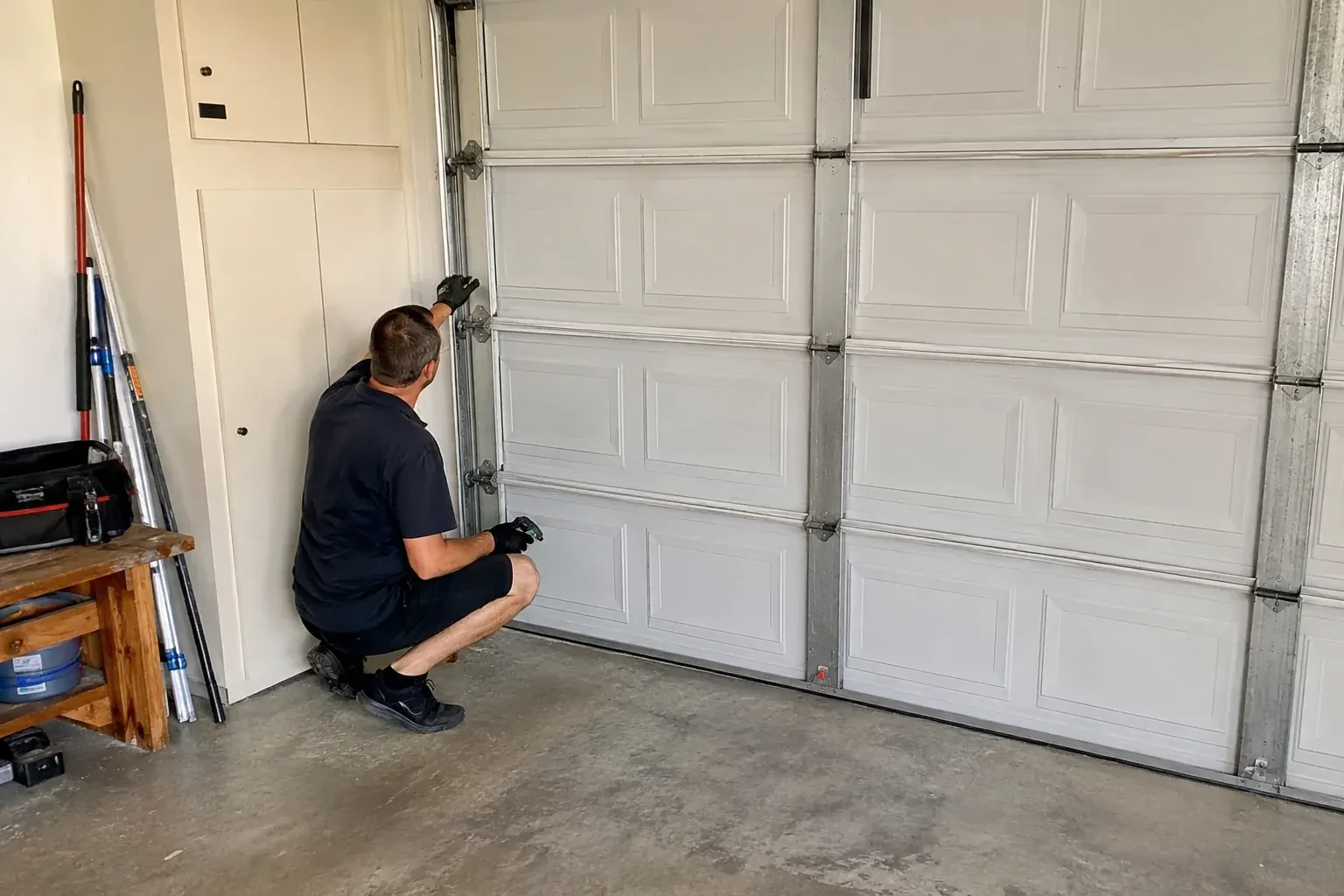
- A delivery van backed into the shop's overhead door this afternoon. The lower panel is pushed in, the track on that side is kinked, and the door is hanging unevenly with staff unable to close up for the night.
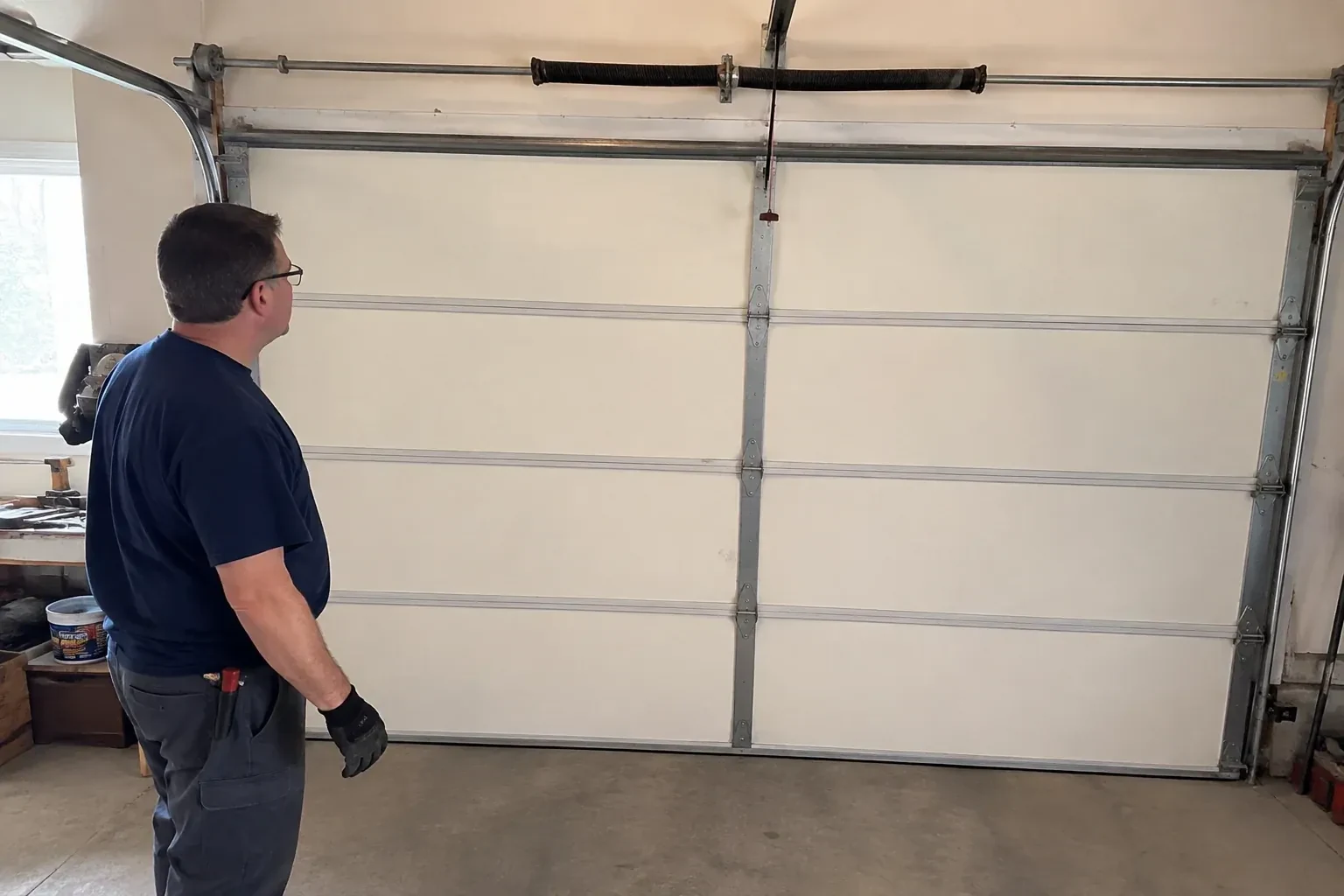
You tapped the door with the bumper while backing in, barely a nudge, and now the bottom corner has swung inward. One roller is dangling outside the rail, the section is twisted, and the door will neither rise nor settle flat.
The reason to stop pressing the wall button is that an opener cannot tell a racked door from a heavy one. Each cycle drives the tilted sections harder into the rails, bending hinges, tearing the track from the jamb and stressing the cables that are already out of place. A reset begins by taking the opener out of the picture with the release cord and supporting the door where it sits. From that calm starting point the technician can re-seat rollers and cables in a controlled order, restore alignment and hand you back a door that the opener can move without fighting it.
Sound familiar?Blair
Off-Track Garage Door Reset · Blair
Scene 1
A short conversation fills in the picture. Did a vehicle touch the door? Was there a bang, a squeal or a grinding noise? Had the door been frozen to the floor that morning, or had something been left under it? Was one side already hanging lower for a while? Had the rollers been noisy for months? Each answer points at a different cause: impact, cable failure, ice, obstruction or long wear. Photographs the homeowner took from a safe distance are useful too, because they show the door before anything moved. This history is the difference between resetting the symptom and fixing the reason.
Scene 2
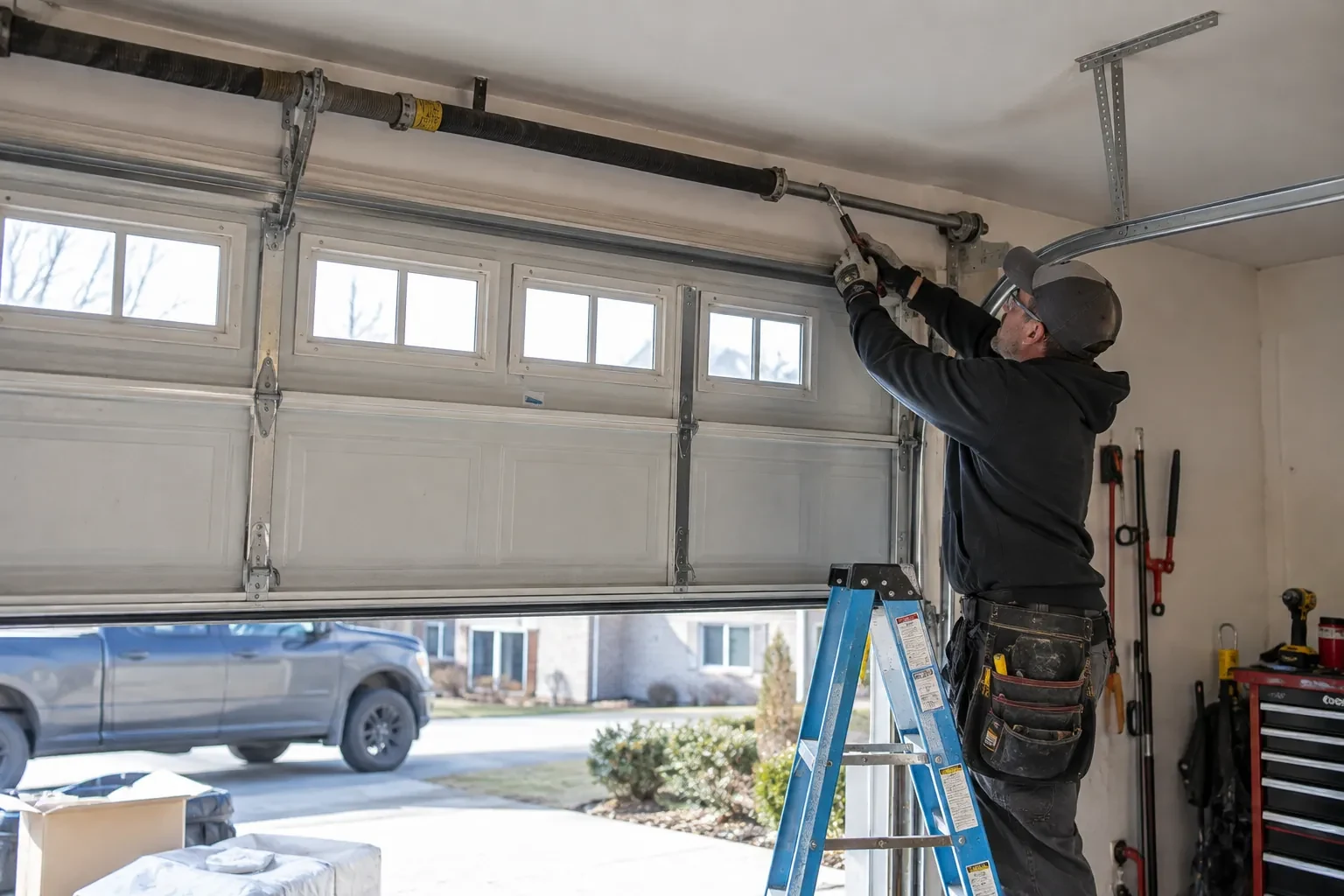
Nothing is pulled or lifted while the door is loaded. On a torsion door the technician may wind the spring tension down with winding bars fitted to the cones, working one quarter turn at a time with the set screws controlled, so the sections can be moved without the springs snatching them. On an extension-spring door the load comes off by raising the door fully and securing it, which relaxes the springs. Clamps and props hold every section in place throughout. With the load off, a section that seemed immovable can be shifted a few centimetres by hand, which is all that is needed to bring a roller back.
Scene 3
Most impact-related off-track calls come from small nudges rather than collisions. Parking with the bumper a little further from the door, keeping bicycles, bins and hockey gear out of the door's path and never leaning long objects against the sections inside all remove the common triggers. Anything stored on the floor near the opening should sit clear of the space the door sweeps through and clear of the photo eyes. If the garage is tight, a simple stop on the floor or a hanging marker for the windscreen gives the driver a fixed reference and takes guesswork out of parking in the dark.
What shapes the quoteHespeler Door & Opener Co.
FeesSame any hour
Sometimes, but not always. Once the door runs true by hand, the trolley is reconnected and the opener is checked against its own travel limits and force; those are only reset if that check shows they have drifted, since many openers need no force change after a repair like this. The reversal is then checked against a block laid in the door's path and by interrupting the photo eyes from a safe distance. If the opener strained hard during the event, its arm and bracket are checked too.
Yes, with the extra weight and size of a commercial door taken into account. The door is secured, the impact damage to sections, track and brackets is assessed, and the reset is paired with whatever track or hardware replacement the strike requires. Because the opening usually needs to be secured before the premises can close for the night, tell the technician when you call so the right track profile and rollers arrive with them.
The principle is the same but the sequence differs. With side springs the door is first opened all the way and clamped, because that is the position where the springs carry no load; the cables are then checked over their pulleys and evened up at the clips. The technician also checks that a containment cable runs through each spring, which stops a broken spring flying across the garage, and fits one if it is missing.
WaterlooOntario
Every square is one home in a hundred.
On-site assessment
You tapped the door with the bumper while backing in, barely a nudge, and now the bottom corner has swung inward.
(226) 887-1169, open 24/7.
On-site assessment preferred · (226) 887-1169, open 24/7