Sound familiar?Cambridge
- The call
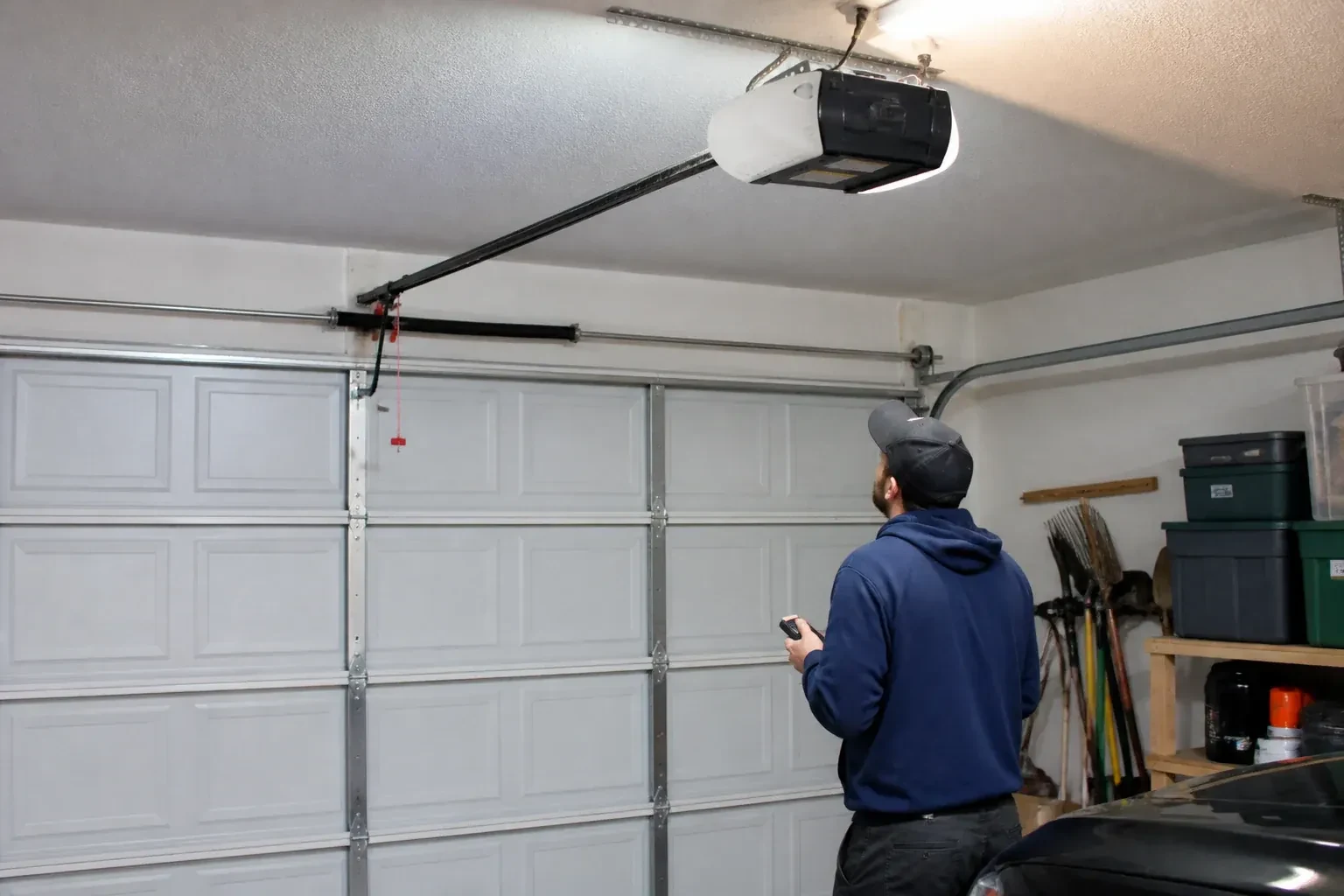
- The rail shakes when the door runs. The steel straps holding it to the ceiling have worked loose, the chain rattles the length of the garage, and a bolt has already dropped onto the hood of the car.
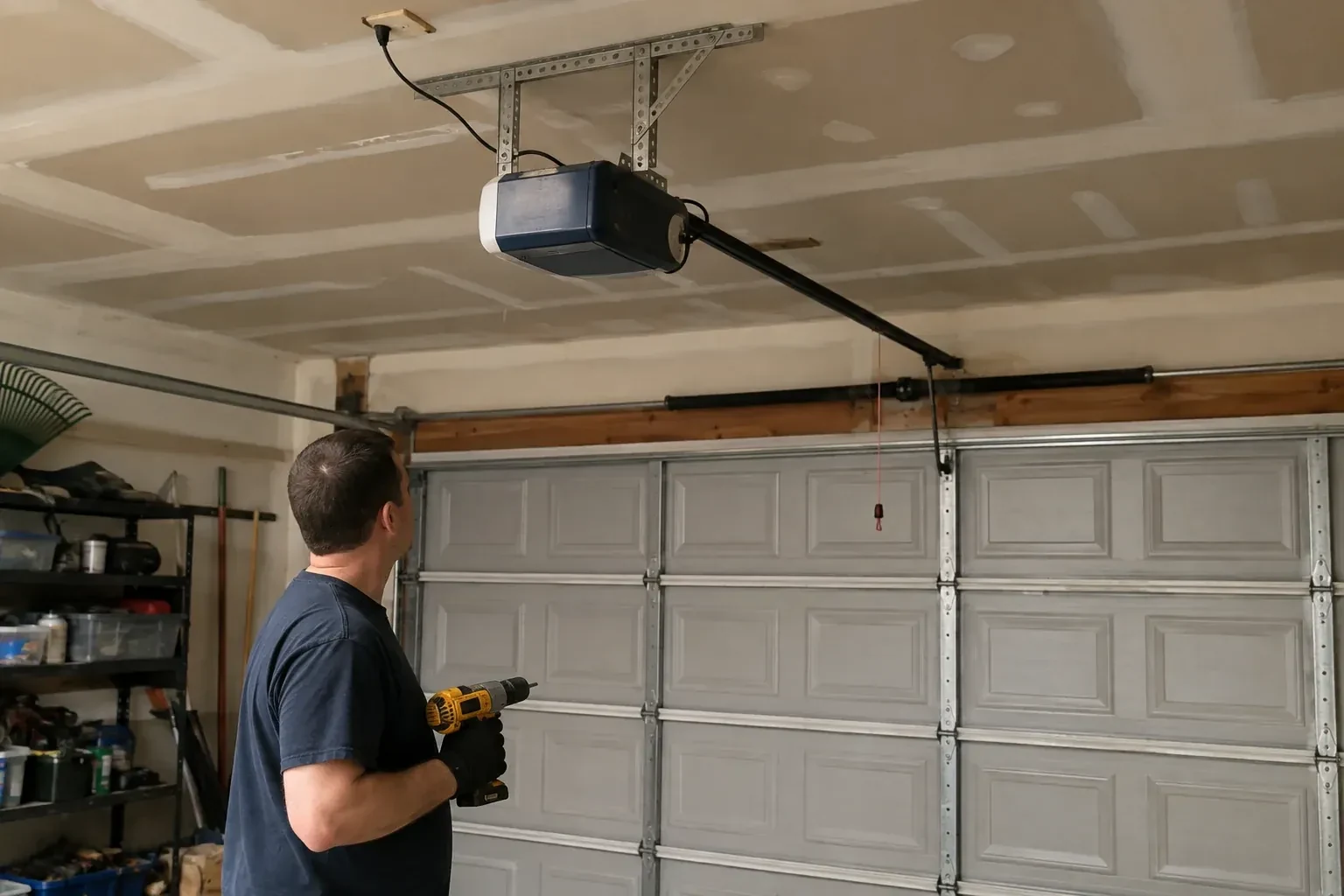
The motor runs, you can hear it working, but the door never moves. When you look up, the sprocket on top of the head is barely turning, and there is a little drift of pale plastic dust on the cover.
A chain drive is never silent, but it should be steady. New rattles, clanks and grinding each point somewhere specific. A chain slapping the rail is loose tension. A rhythmic clack at one spot is a worn or hooked sprocket tooth, or a stiff link passing over it. Grinding from the head is gear trouble. A rail that shakes has loose hangers or a header bracket working out of the wood. The technician runs the door by hand first to separate door noise from drive noise, then works through the drive from sprocket to trolley, tightening, tensioning or replacing what the sound identified.
Sound familiar?Cambridge
Chain-Drive Opener Repair · Cambridge
Scene 1
Before the repair begins, the technician confirms the parts that will be tested at the end are in place. The photo eyes should sit no higher than about 15 cm off the floor with steady indicator lights; the wall control at least 1.5 m up and in sight of the door; the red release handle no more than about 1.8 m above the floor; the manual slide lock on the door disabled. The garage itself is noted: whether it is heated, whether the chain shows salt corrosion from vehicles, and whether the head plugs into a nearby receptacle or a draped extension cord. These points shape the repair and the advice that follows it.
Scene 2
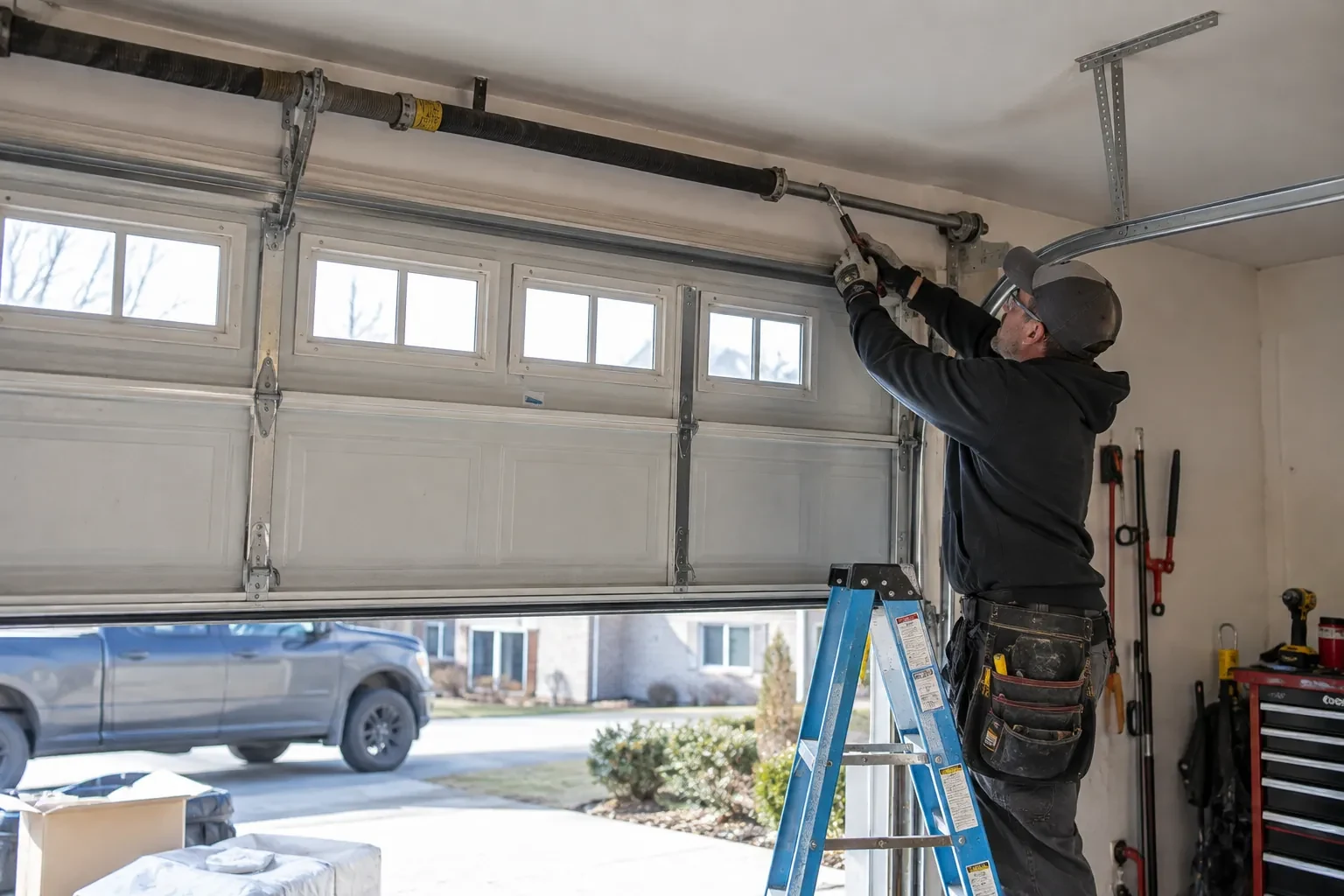
With the door closed and disconnected, the two nuts on the tensioner shaft at the trolley are used in order. The outer nut, nearest the door, is loosened until the chain droops below the rail, the inner nut is backed off to make room, and then the outer nut is turned to raise the chain until it sits at the height the opener's own manual calls for on that rail shape, measured at the rail's midpoint. The inner nut is tightened against it to lock the setting. Once the door is reconnected and closed some droop appears in the chain; that is normal provided the measurement returns with the door open.
Scene 3
The rail was cleaned and given a thin coat of white lithium grease where the trolley runs, on the schedule that opener's own manual calls for, often every two or three years, with the old grease wiped away first. The gears inside the head were packed with the same grease and need nothing between services. The chain itself is treated only as the maker's manual directs, often not at all, since heavy oil collects grit and drips on the car. Rollers, hinges and bearings on the door take a garage door lubricant once a year. The tracks the rollers run in take none, and penetrating sprays stay away from the whole system because they strip grease from gears.
What shapes the quoteHespeler Door & Opener Co.
FeesSame any hour
No. The manual slide lock on the door is disabled or removed once an operator is connected, and the technician checks that during the repair. A motor pulling against a locked door strains the chain, strips the drive gear and can bend the top section of the door. If you want the door secured against remotes, the lock button on the wall control switches them off, and a track lock designed to work with an operator does the rest.
The sprocket is the toothed wheel on top of the motor head that pulls the chain. Every cycle drags the chain over its teeth, and over years the teeth wear thin and hooked, letting the chain ride up and skip under load, often at the same point on the rail each time. A sprocket that has loosened on its shaft lags behind the motor. Worn sprockets are replaced as part of the gear and sprocket assembly.
Always, and after every adjustment, because changing tension, limits or force changes how the operator senses an obstruction. The door is closed onto a 38 mm block on the floor and must return to open on contact, then closed again while the low sensor beam is interrupted and must reverse the same way. If either test fails the settings are revisited until both pass, and you are shown the tests so you can repeat them monthly.
WaterlooOntario
Every square is one home in a hundred.
On-site assessment
The motor runs, you can hear it working, but the door never moves.
(226) 887-1169, open 24/7.
On-site assessment preferred · (226) 887-1169, open 24/7