Sound familiar?Cambridge
- The call
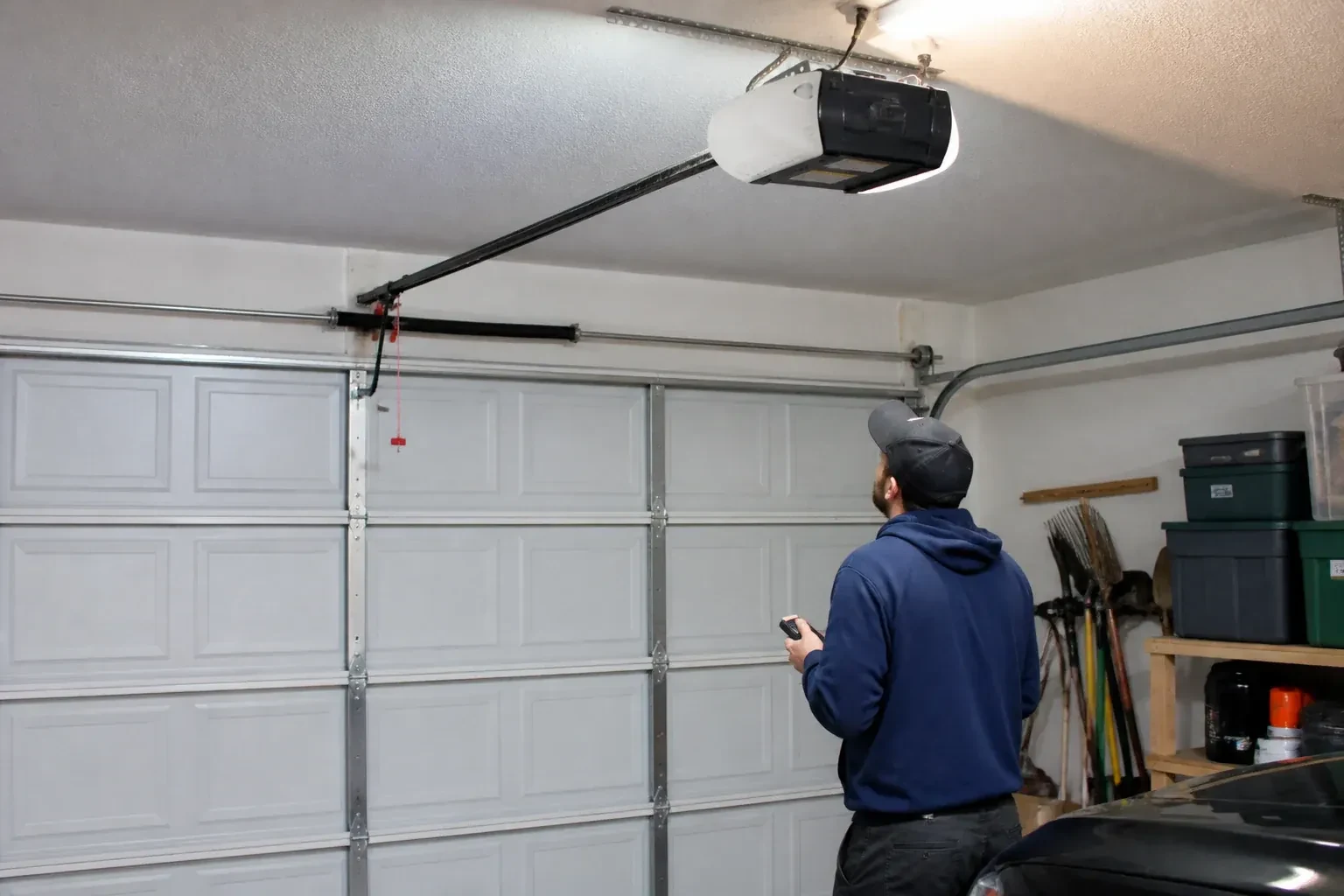
- It is minus twenty in the detached garage and the door climbs in jerks, the belt stiff as a board. By the afternoon, when the sun has been on the door, it runs almost normally again.
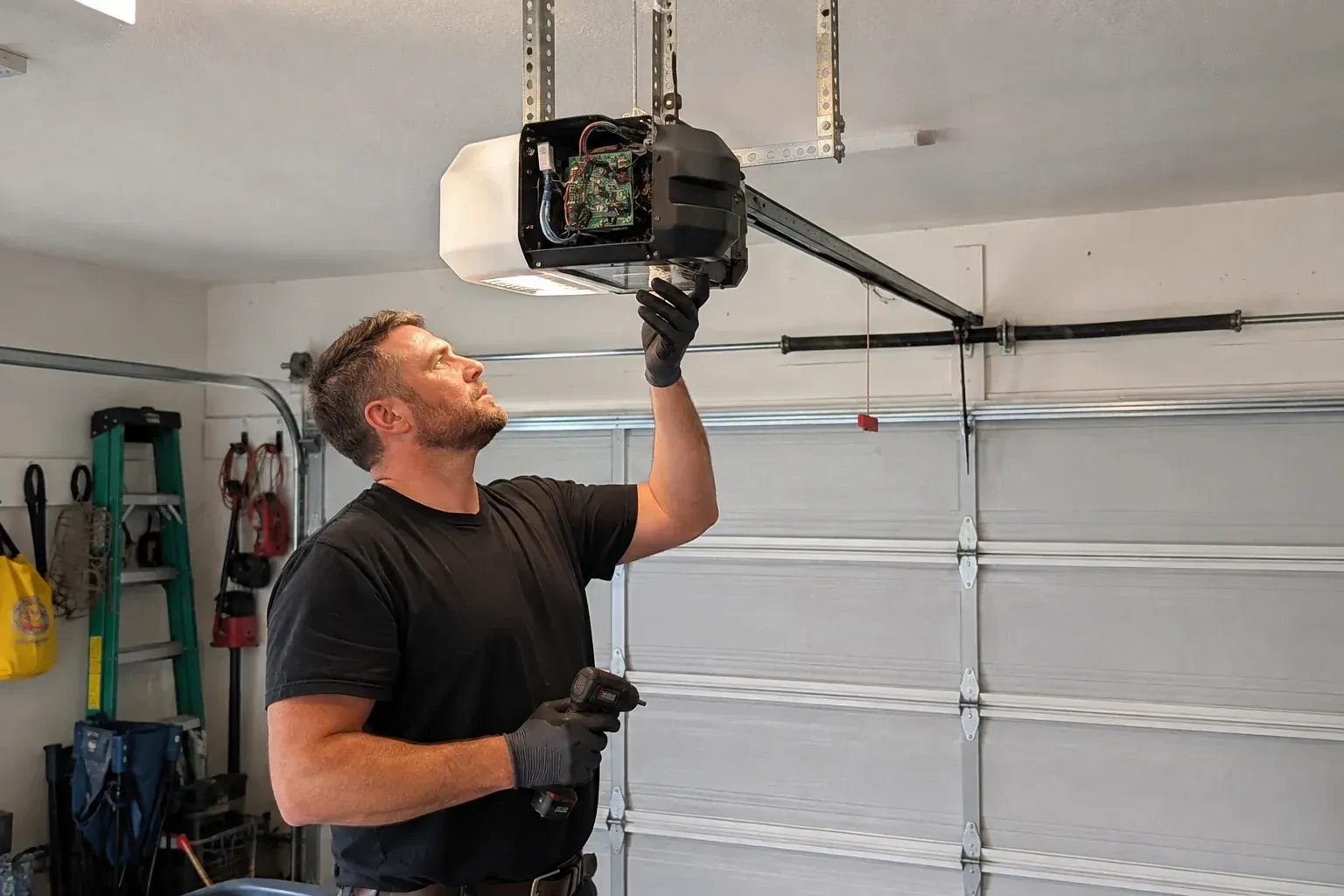
The door used to glide up with a soft hum. Now there is a sharp clack every second or so, and if you stand underneath you can see the belt sagging below the rail and slapping it on the way up.
A belt drive is chosen for its quiet, so one that has started to rattle is saying something specific. Sprocket noise usually means the belt is either too loose or too tight. A squeal from the front of the rail points to the idler pulley bearing. A clack at the same point in every cycle is a run of worn teeth or a rail joint out of line. A hum with no movement is a broken clip, a stripped gear or a belt off its sprocket. Repair means reading those sounds, confirming them by inspection and replacing the one component responsible, so the operator returns to its hush.
Sound familiar?Cambridge
Belt-Drive Opener Repair · Cambridge
Scene 1
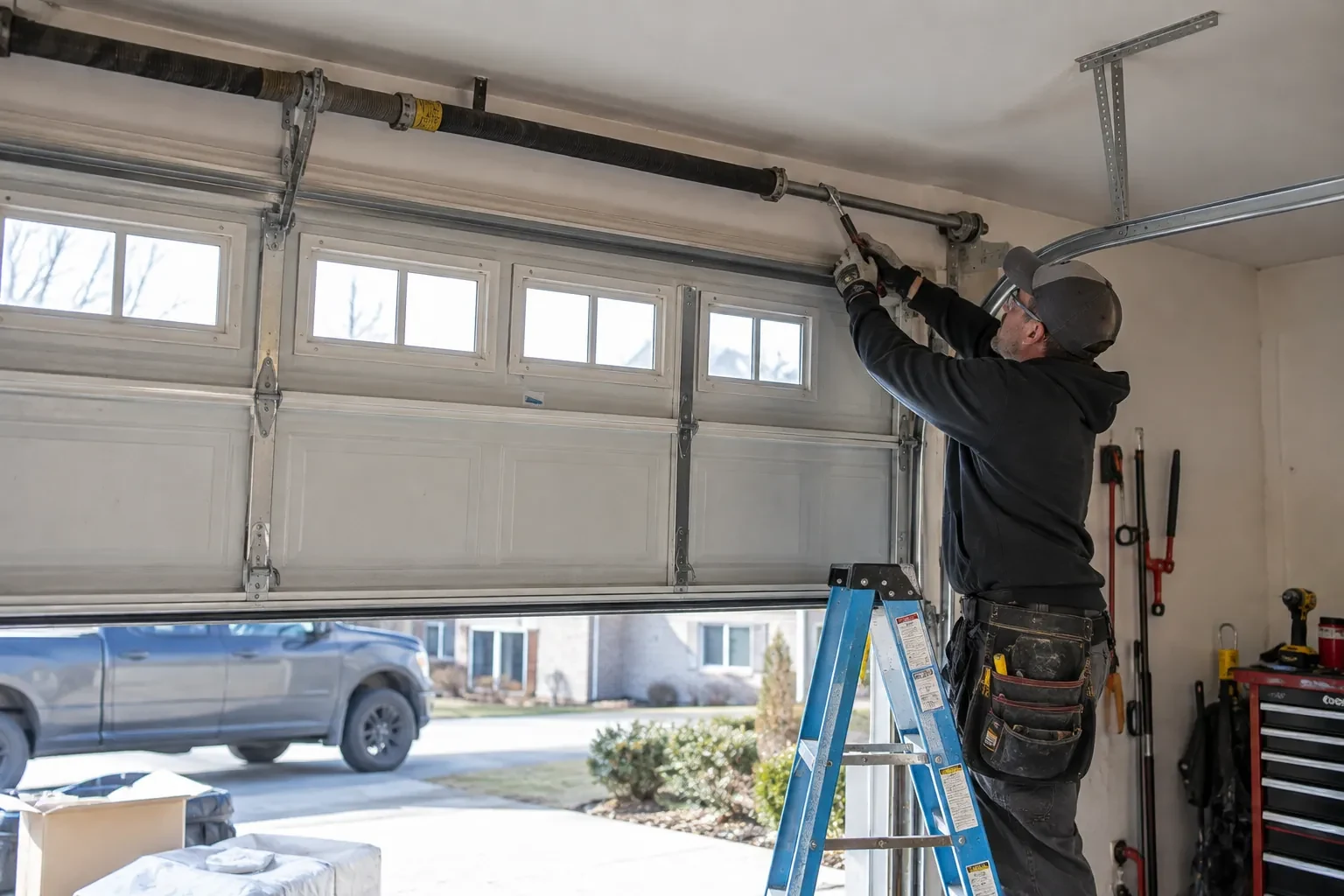
A belt frays for a reason, and the reason is usually somewhere along the rail. The technician sights the rail from the header to the motor head for a bend, a sag where a hanger has loosened, or a joint between rail sections that has stepped out of line and is catching the belt teeth each pass. Marks inside the rail show where the belt has been touching. Storage racks, a bicycle hook or a truck's roof rack lifting the rail are frequent finds. A straight, true rail lets a belt run for years without touching anything, so any of these is corrected as part of the repair rather than left to wear the new belt.
Scene 2
Any time the belt has been off the sprocket, the operator's sense of where the door is can drift from where the trolley actually sits, so this step is done before the door is reconnected. The technician lifts the belt clear of the sprocket, runs the operator until the sprocket turns to its closed position and stops on its own, then slides the trolley to the closed end of the rail and refits the belt. Motor and trolley now agree. On operators with a mechanical limit assembly, the middle contact is adjusted instead. Without this step, the door stops short at one end no matter how the travel limits are turned.
Scene 3
The repair ends with the reversal tests run in front of you, and they are yours to repeat monthly. With the door fully open, lay a scrap of 2x4 flat on the floor where the door meets it, press the wall control and watch: the door should touch the wood and climb back to the top. Then, with the door closing, pass a broom handle through the beam near the floor; it should reverse the same way. Both take under a minute. If either test ever fails, stop using the operator, work the door by the red cord, and have a trained technician check it; the fault can be the settings, the sensors, the wiring or the opener itself.
What shapes the quoteHespeler Door & Opener Co.
FeesSame any hour
A belt's life is counted in cycles and years, and on a balanced door with the rail straight and the tension right it runs for many years. What shortens it is a heavy door, an over-tight adjustment, a bent rail rubbing one edge, or grease on the rubber. Keep the door balanced and lubricated, the belt dry, and glance along the rail a few times a year.
Sprocket noise on a belt drive almost always means tension is wrong in one direction or the other. A slack belt skips teeth on the sprocket and slaps the rail; a belt pulled too tight grinds on the sprocket and strains the motor bearings. Both sound harsh. Setting the tension spring to its proper length, and checking that the sprocket and idler pulley are not worn, brings the quiet back.
Cracks across the back of the rubber, a shiny glazed surface, a fuzzy or frayed edge, teeth worn flat or torn away in a stretch, and cords showing through the rubber. The clip at the trolley can also go brittle and snap. Most belts show one of these long before they fail, which is why a glance along the rail every few months catches a repair early.
WaterlooOntario
Every square is one home in a hundred.
On-site assessment
The door used to glide up with a soft hum.
(226) 887-1169, open 24/7.
On-site assessment preferred · (226) 887-1169, open 24/7