Sound familiar?Cambridge
- The call
- Watching from inside as the door opens, you can see the gap between the second and third panels open up on one side as they turn the corner into the ceiling, then close again. The other side stays tight.
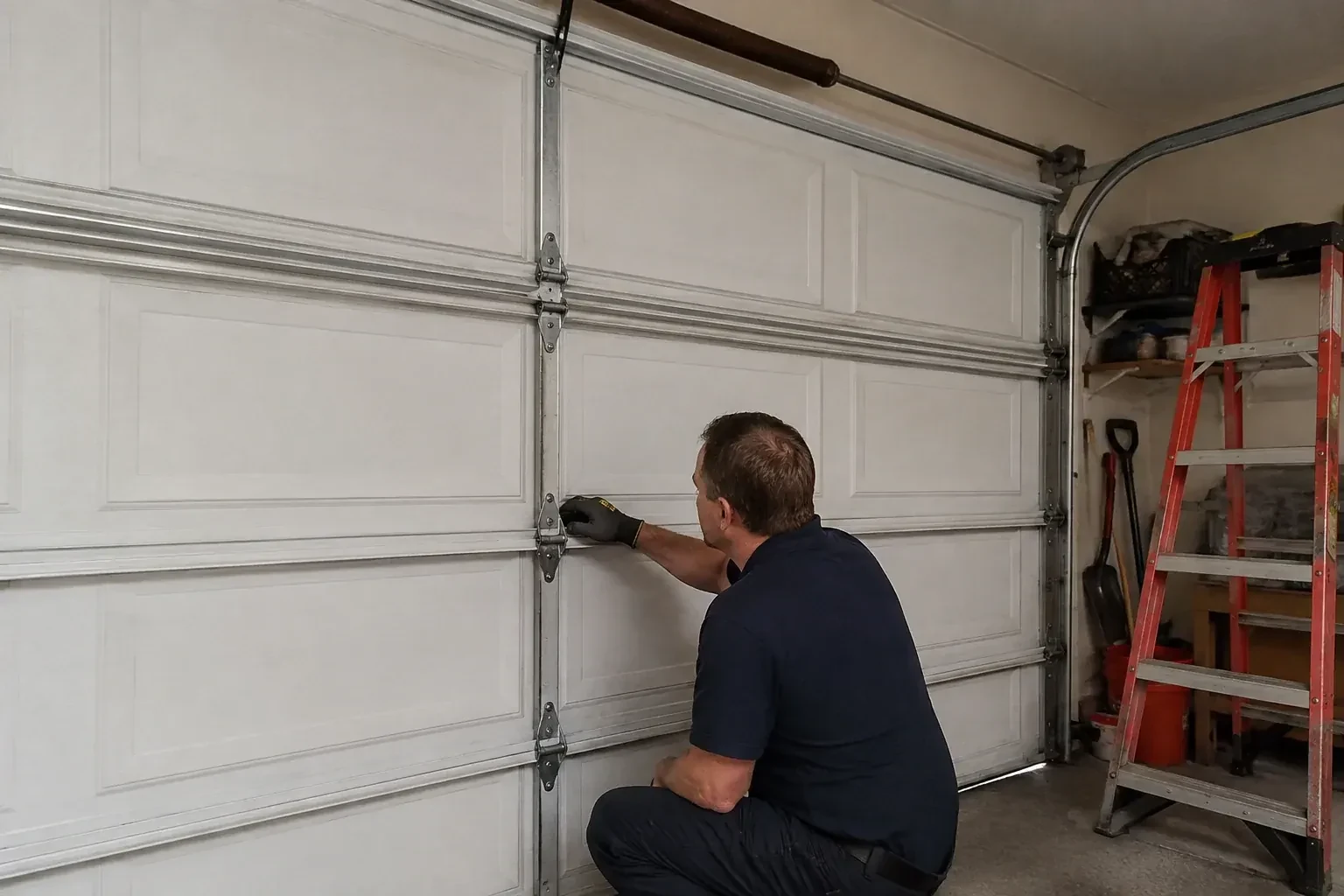
Not every hinge on the door is the same part. The edge hinges are numbered: 1 at the joint above the bottom panel, then 2, 3 and sometimes 4 or 5 going up. Each number stands the roller a little further off the door face, which is what lets the door lean snugly against the jambs when closed even though the tracks angle away from it. Centre hinges carry no roller and share the geometry of a 1. Reading the stamped number on the old hinge, or counting the joint from the floor, is how the replacement is chosen so the door keeps sealing evenly along both sides.
Sound familiar?Cambridge
Garage Door Hinge Replacement · Cambridge
Scene 1
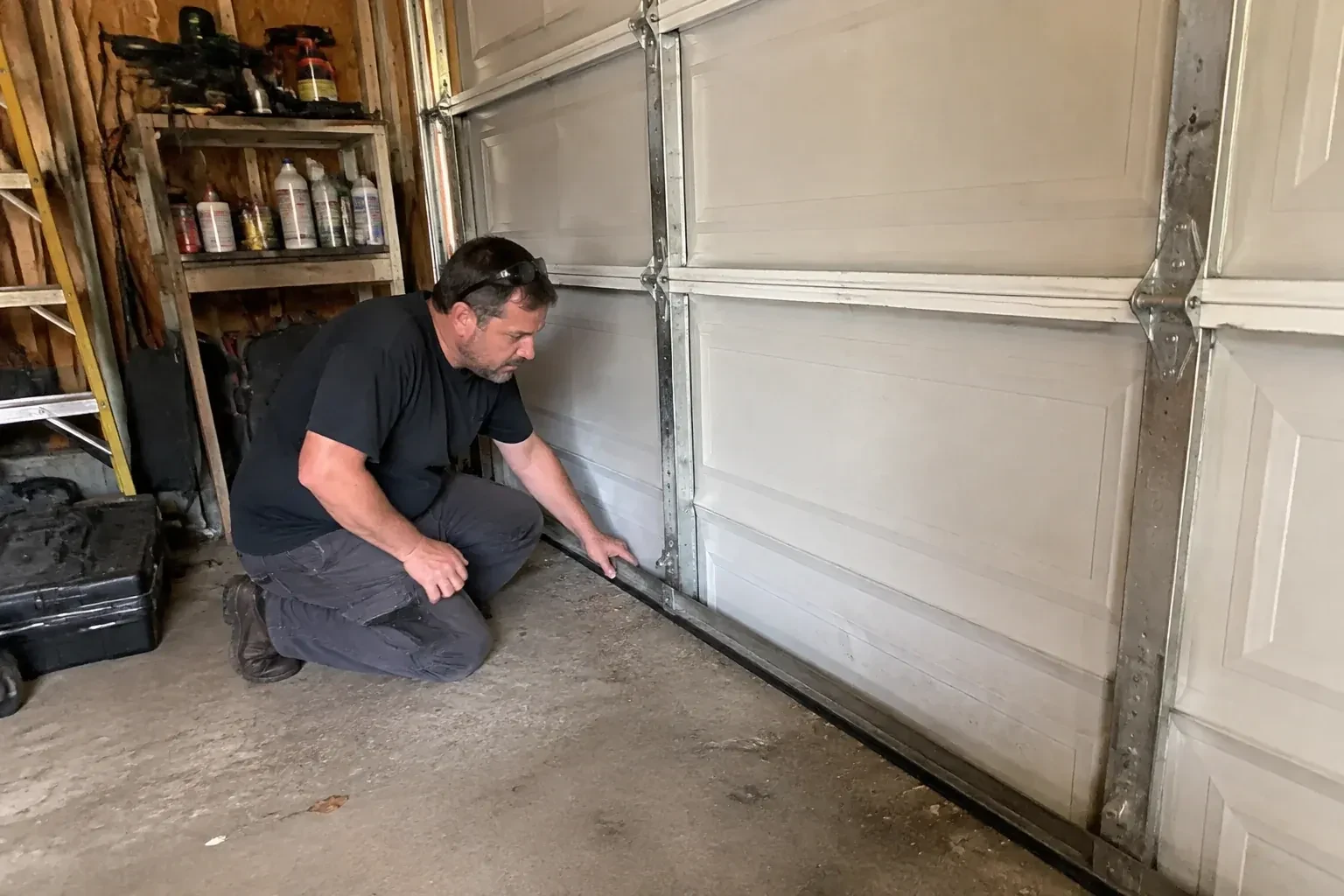
With the door still closed, the technician checks how it sits against the opening: does the door press evenly against the jambs on both sides, is there daylight at one edge, and do the panels line up flush with each other? Then the vertical tracks are checked for plumb, spacing from the door face and secure brackets, and the curve is examined for a smooth run. This matters because hinge numbers and track angle work together; a hinge of the wrong number, or a track that has crept, shows up here before the door moves. It also gives a baseline to compare against once the new hinges are on.
Scene 2
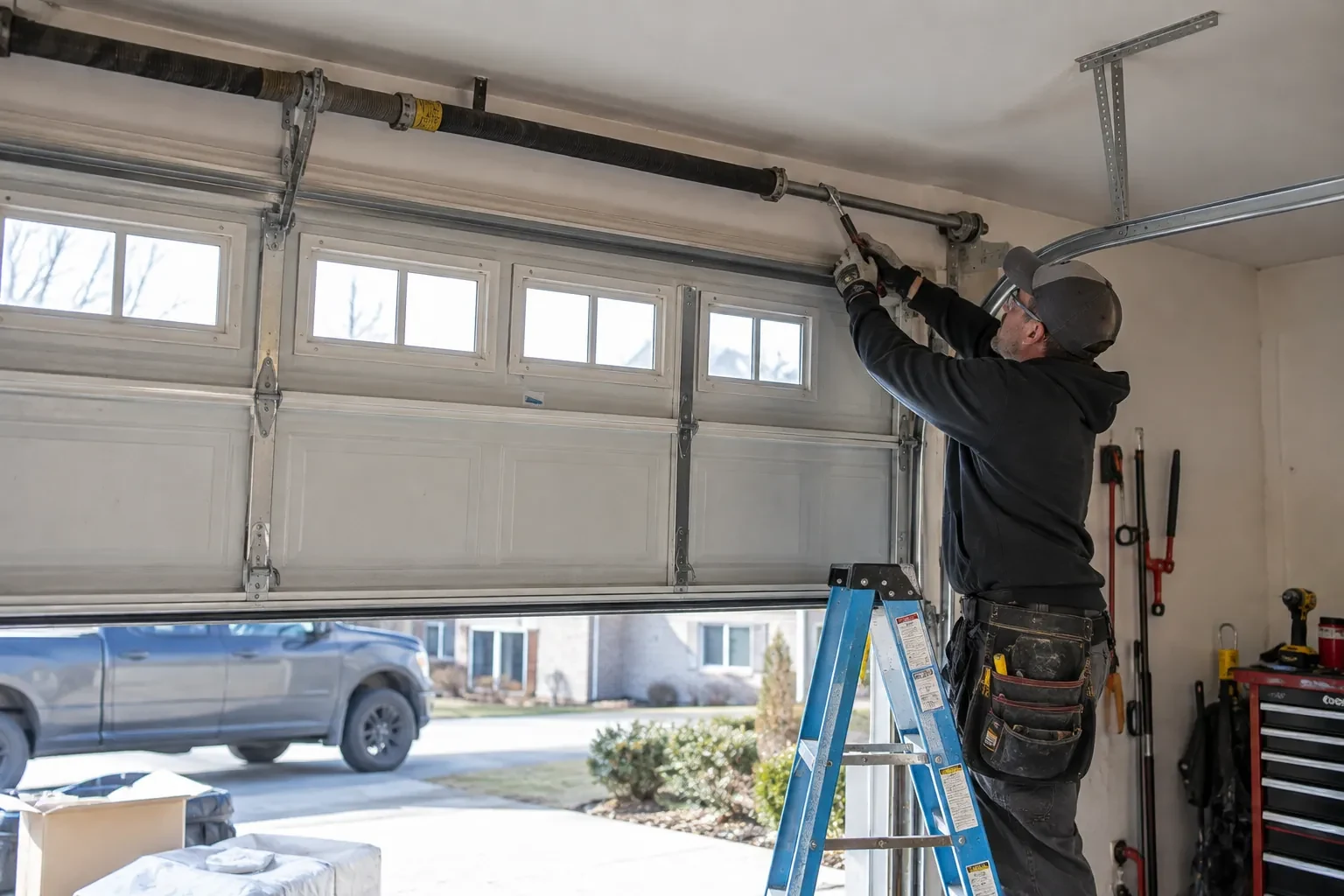
Every replacement hinge is matched three ways. The number matches the joint, read from the old hinge or counted from the floor, so the roller sits at the correct offset. The gauge matches or improves on the original: 18 for a light door, 14 for the heavier residential standard, and thicker still where a heavy insulated door or heavy use calls for it. The width and hole pattern match the stile, since a hinge from one maker may not line up with another's panels. Where the door has a mix of numbers from earlier repairs, the technician corrects them so all edge hinges follow the proper sequence.
Scene 3
Hinges want a light film of lubricant on the pin where the two leaves meet. Spring and autumn are the natural moments. Use a silicone or white lithium spray made for garage doors, put a short burst on each hinge knuckle and on the roller stems, then run the door a few times to spread it. Heavy grease or general oil holds grit and salt against the steel, so it is avoided. Leave the track itself dry and simply wipe it clean, since lubricant there collects dirt and lets the wheels slide. Ten hinges take about as long as making a coffee.
What shapes the quoteHespeler Door & Opener Co.
FeesSame any hour
Steel flexed often enough eventually cracks, and several things speed that up. A door out of balance is dragged by the opener, and every hinge takes the strain. A seized roller twists its hinge on each trip. A track out of line pinches the panels at the curve. A wide panel without a strut flexes at the joint. Corrosion at the low hinges thins the steel. The technician looks for which of these was at work so the new hinge is spared the same stress.
Whether the door is closed, open or stuck; where the noise or the gap appears and roughly how high; whether you can see a cracked, bent or loose hinge and whether it is at the edge or the middle; whether the door is a single or a double, steel or wood, and how many panels it has; and whether anything hit the door lately. A photo of the hinge and its stamped number is useful.
A short burst of silicone or white lithium spray made for garage doors on each hinge knuckle and roller stem, spring and autumn, then run the door a few times to work it in. Wipe away any excess. Skip heavy grease and general-purpose oil, which trap grit and salt against the steel. Leave the track dry and simply wipe it clean, since lubricant in the track makes wheels slide instead of roll.
WaterlooOntario
Every square is one home in a hundred.
On-site assessment
Pressing a hand against one of the middle hinges makes it rock on the panel.
(226) 887-1169, open 24/7.
On-site assessment preferred · (226) 887-1169, open 24/7