Skip to content
HespelerDoor & Opener Co.Open 24/7 (226) 887-1169
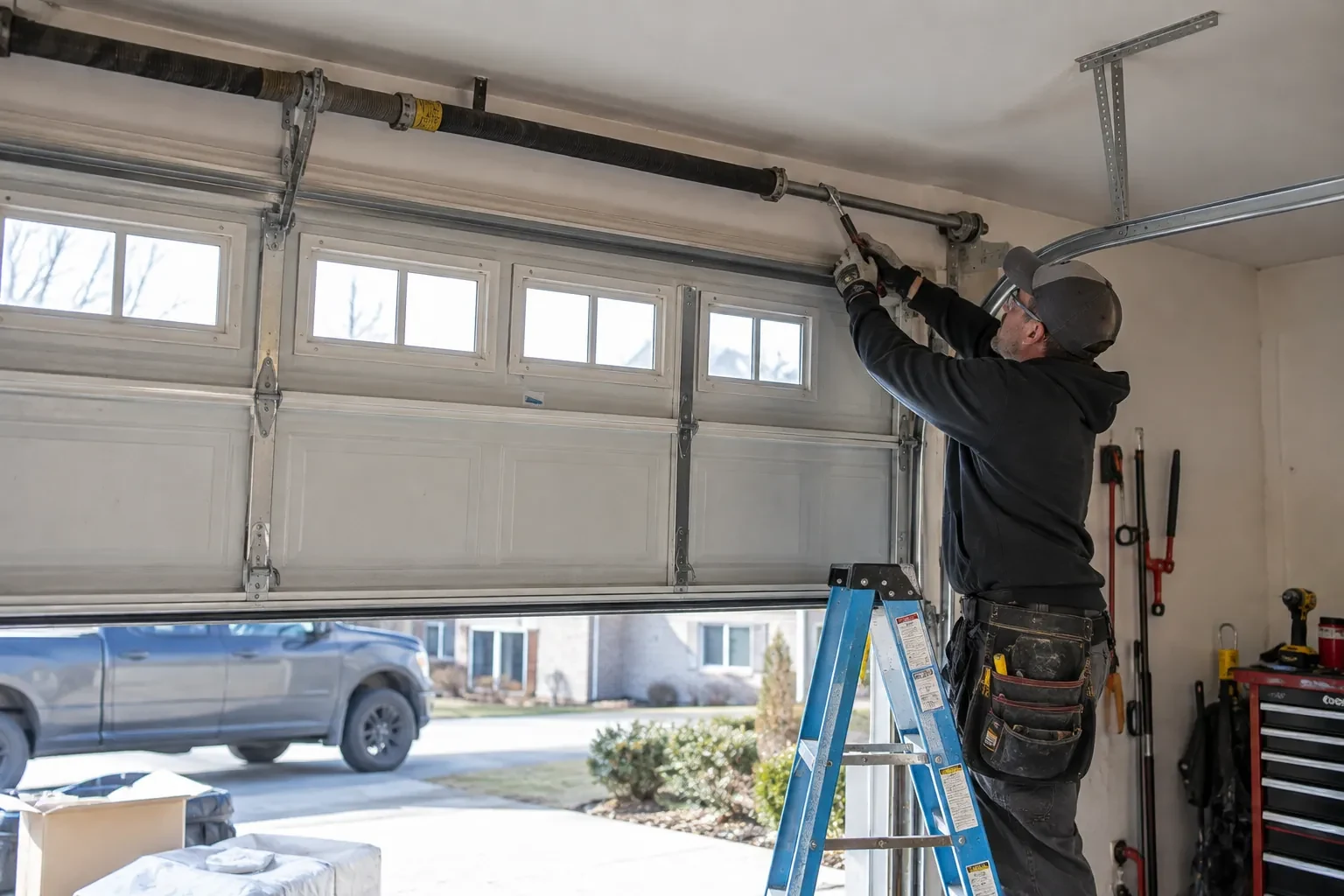
Technician on a blue stepladder using a wrench on a black torsion spring bar above a sectional door with small windows.

Openers · Cambridge

Smart Garage Controller Setup

One remote lives in a car you sold last spring. The other needs three presses from the driveway and its battery cover is taped on.

In plain words

For a household here, the most valuable feature is often the simplest: a message that says the door has been open for ten minutes on a January night. A garage attached to the house shares a wall with living space, and sometimes a water line; a door left up drains heat and invites a frozen pipe. Setup in this climate also means small choices that last: the sensor is mounted the way its own instructions specify, its battery is a lithium cell that tolerates an unheated space, and an auto-close schedule is paired with a left-open alert, since a schedule only attempts the close and does not confirm it finished.

Sound familiar?Cambridge

The call
A contractor is coming to work in the garage on Thursday while you are away. Handing over a remote means chasing it back afterwards, and the keypad code is the one your whole family uses. What you want is access that ends when the job does.
NextHow the visit goes

Smart Garage Controller Setup · Cambridge

How the visit goes

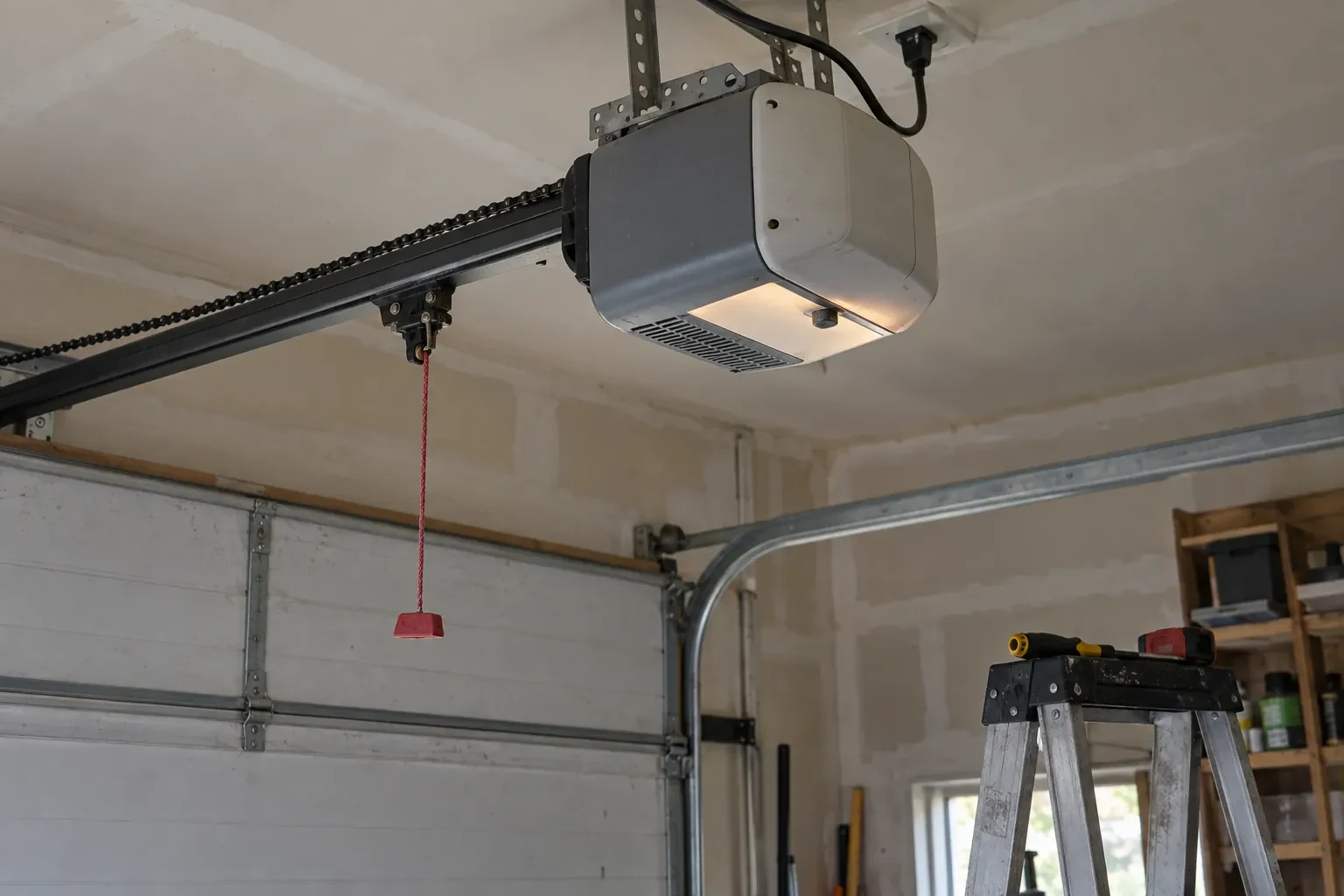
Chain-drive opener hanging from the ceiling with a lit lamp lens and a red pull cord, above a gray door and ladder.
  1. Scene 1

    Photo eyes, present and working

    Remote closing is the feature most people want, and it rests on the pair of small sensors near the floor on each side of the door. Before any controller is fitted the technician confirms both eyes are present, mounted no higher than about fifteen centimetres, aligned so their indicators glow steady, and wired without breaks back to the head unit. A controller built to the operator standard will not offer an out-of-sight close without a working sensor circuit, so any missing, misaligned or failed pair is corrected as part of getting ready. This is also where sun glare, cobwebs, frost and a shovel leaning against a bracket are noticed and dealt with.

  2. Scene 2

    Wiring a hub to the wall-control terminals

    On openers that accept a simple push-button contact, the hub is connected with two lengths of low-voltage bell wire to the same terminals the wall console uses. The technician routes the wire along the rail or ceiling, clipped clear of the chain and trolley, and lands it neatly beside the existing console wires. Openers that use an encrypted wall console take a different route: either the hub pairs by radio, taught to the opener through the learn button like a new remote, or a small dry-contact adapter sits between them. Whichever applies, the wall console keeps working exactly as before, and the hub simply becomes one more way to give the same command.

  3. Scene 3

    The monthly tests still matter

    Adding a controller changes nothing about the physical checks the door needs, and adds one. Each month, lay a 2x4 flat under the door centre and close it; it must reverse on contact. Break the photo-eye beam with a broom handle while closing; it must stop and rise. Then close the door from the app out of sight, and listen for the beeper and watch for the light before movement. If any of the three fails, stop using the opener, move the door by hand only if it must move, and have a technician correct it before the opener is used again. These tests take a couple of minutes and are why remote closing can be trusted.

In the van

  • Mounting screws and brackets
  • Receptacle splitter with approval mark
  • Cable clips and insulated staples
  • Retrofit smart hub
  • Plug-in power adapter

What shapes the quoteHespeler Door & Opener Co.

Power for the hub
The hub plugs into the opener's ceiling receptacle. If there is no spare socket, an approved splitter or a receptacle added by an electrical contractor becomes part of the plan.
Wireless coverage at the garage
A strong signal at the ceiling is a straightforward join. A weak one, common in detached garages, calls for an access point or extender, which is quoted separately.
Users and devices to set up
Each family member's login, each phone that should receive alerts and each guest access is set up and tested individually, so say how many people are involved.

FeesSame any hour

Have it ready

Before you call · 0 / 3

(226) 887-1169

Things people wonder

Does the hub need its own power?

Yes, from a small plug-in adapter that goes into the same ceiling receptacle the opener uses. There is no battery in the hub itself, so it stays online as long as the receptacle is live. If that receptacle has no spare socket, an approved splitter can be used, or an electrical contractor can add a second receptacle. The adapter should carry a recognized Canadian approval mark, which the technician checks before plugging it in.

What should I have ready before the visit?

A photo of the label on the opener and of the learn button, your Wi-Fi network name and password to hand, the phone you will use with the app charged and updated, and the email address the account should live under. If the house came with an existing controller, any paperwork or the seller's contact details help. Knowing which family members need access saves time at the end.

Why does the door beep and flash before it closes from the app?

Because someone closing a door they cannot see needs to give anyone near it a warning. The operator standard for garage door openers requires an audible alarm and a flashing light for several seconds before a door moves on an unattended command, along with working photo eyes. The beeper and light are built into the controller for that reason, and they are tested during setup so you have heard them yourself.

Cambridgeinformation

WaterlooOntario

Smart Garage Controller Setup · Hespeler, Preston, Blair

Town
Cambridge, Waterloo
In business
32 years
Hours
Open 24/7
Nights, weekends and holidays, same fees
Visits
On-site assessment preferred. Request a visit or call.

2021 census: what it means at the door

Every square is one home in a hundred.

  • 48 in 100 homes · mixed ages
  • About 48% of homes in Cambridge were built in 1980 or earlier, according to the 2021 Census.Where housing is mixed, so are garage sizes: single doors on older lots, double doors on infill and newer builds. Spring pairs, cable lengths and opener strength are all sized to the actual door, and we carry the range to cover whichever door is in front of us.
  • Single-detached houses make up about 57% of homes in Cambridge (2021 Census).Where housing types are mixed, some doors belong entirely to the homeowner and others are subject to a condo corporation's rules on colour and style. Before recommending a replacement door we ask who has a say, so the door chosen is one that can actually be installed.

Source: Statistics Canada, Census Profile

Open Cambridge in Google Maps

On-site assessment

Request a visit.

One remote lives in a car you sold last spring.

(226) 887-1169, open 24/7.