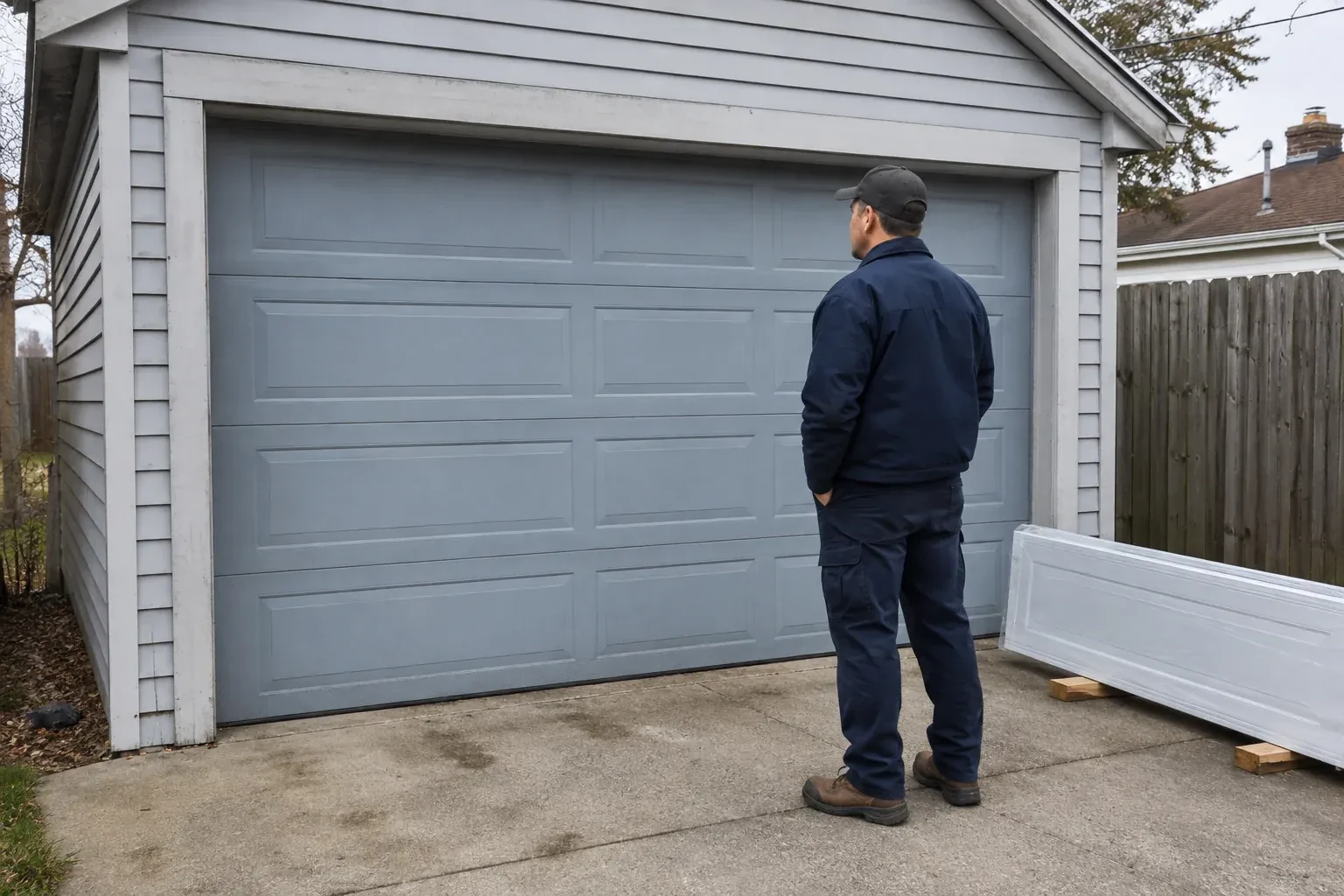
Sound familiar?Cambridge
- The call
- You want windows for natural light without turning the garage into a cold glass wall. The glazing layout, insulated sections and door weight all need to be selected as one working system.
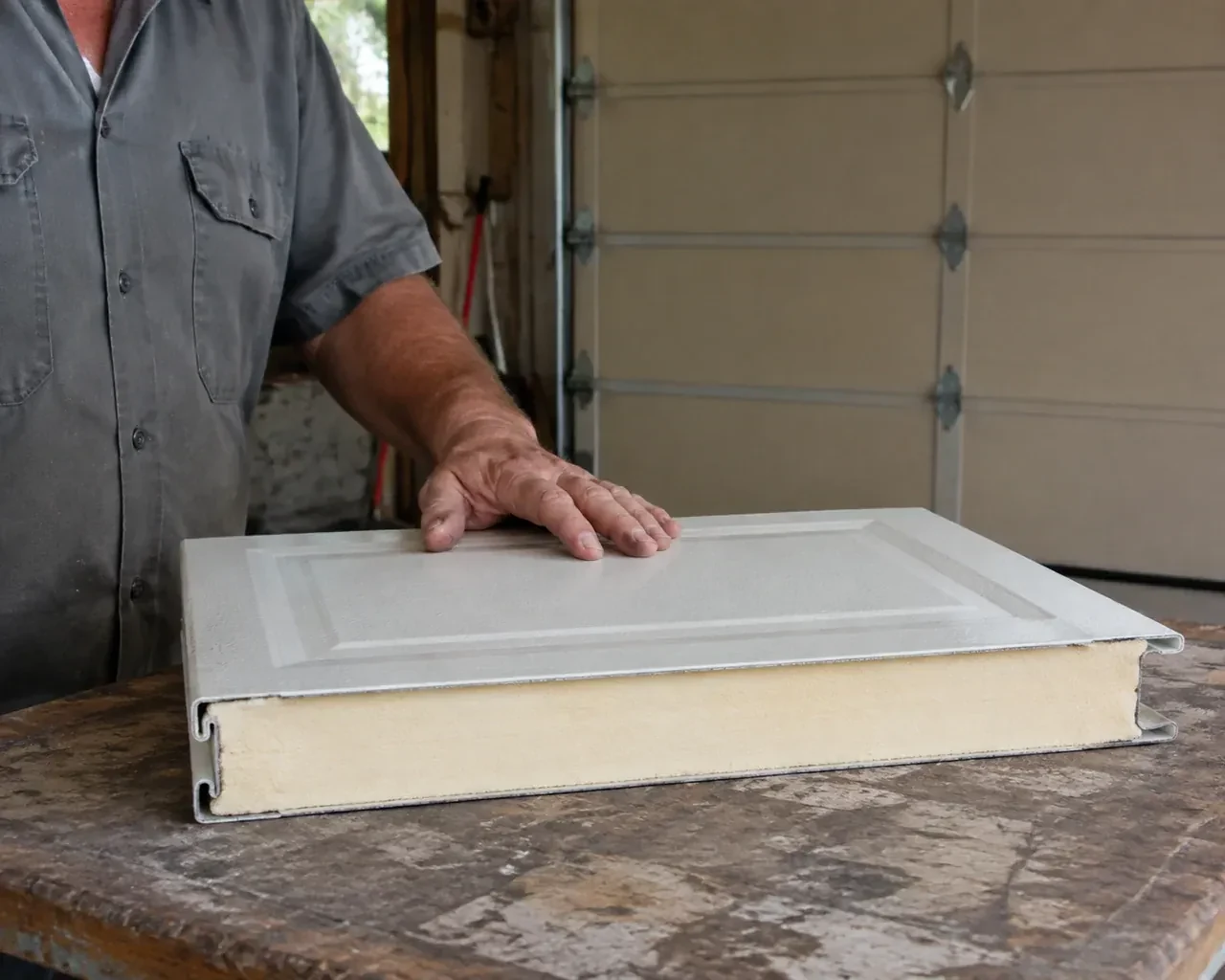
An insulated steel garage door is a sectional assembly with steel faces and insulating material inside the sections. Installation begins with the finished opening, because width, height, floor level, side clearance and ceiling obstructions decide which track and hardware arrangement fits. The selected sections, tracks, rollers, hinges, springs, cables and weather seals are supplied as a coordinated system. After assembly, the installer balances the door by hand, checks its full path, connects a compatible opener where required and confirms the safety functions before demonstrating normal use.
Sound familiar?Cambridge
Insulated Steel Garage Door Installation · Cambridge
Scene 1
Window placement is reviewed from both sides of the door. Outside, the pattern should align sensibly with the selected panel design and surrounding architecture. Inside, the glass should provide the desired daylight or privacy at a useful height. Glazing material, number of panes, inserts and section reinforcement can change weight and thermal behaviour, so they belong in the order specification. Handles, decorative hardware and colour are recorded at the same stage, preventing appearance choices from being separated from the parts that support safe movement.
Scene 2
Weather sealing is fitted after door position is established. The bottom astragal is checked against the slab across the full width, including low spots or a floor that slopes toward the driveway. Jamb and header seals are placed to make continuous, light contact with the exterior face while allowing the sections to move freely. Corners receive particular attention because small discontinuities can admit noticeable light and wind. The closed door is viewed from inside, and seal position is refined where contact is uneven without using excessive pressure to hide an opening problem.
Scene 3
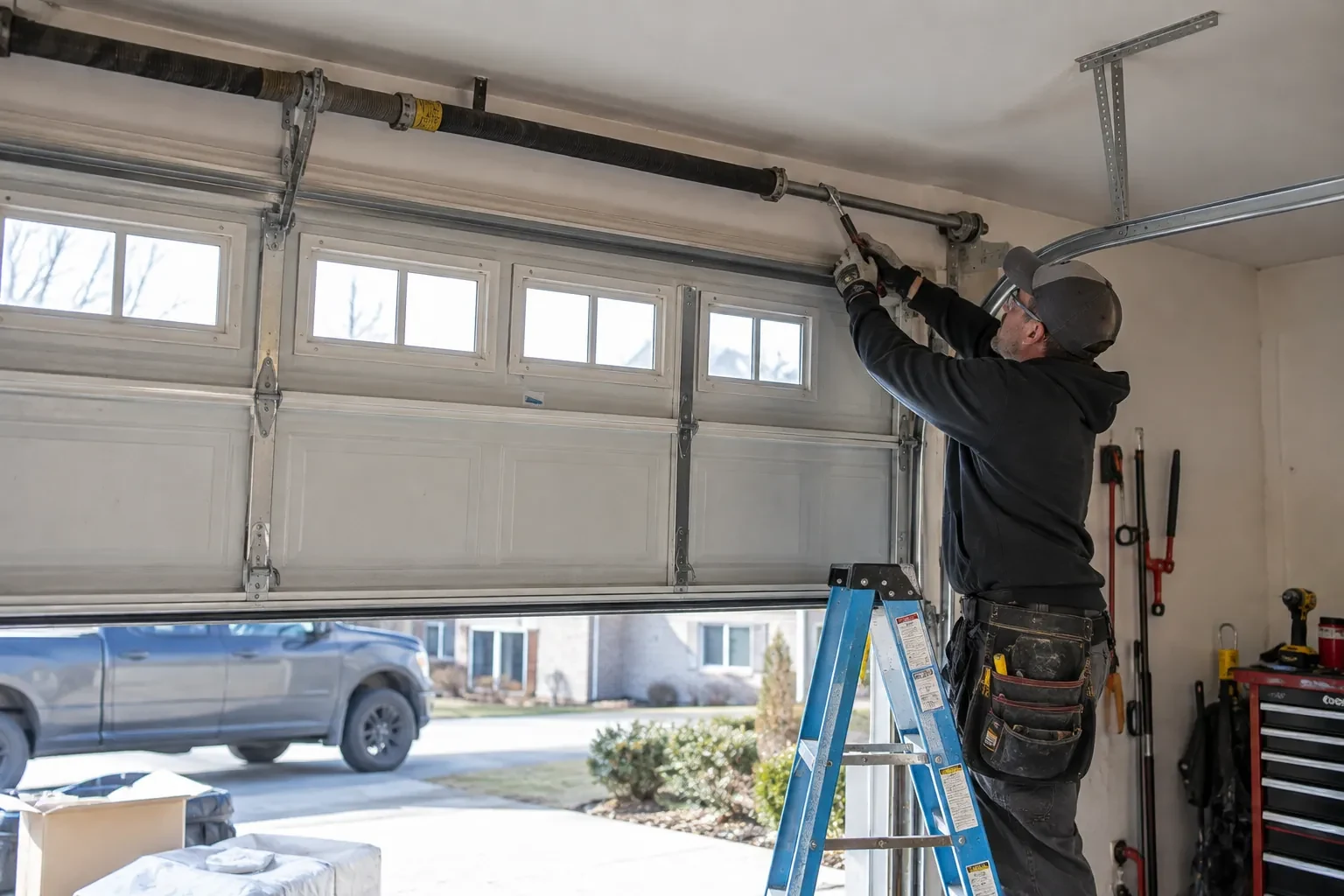
A properly adjusted counterbalance makes the completed door manageable when the operator is released. At handover, the customer is shown the safe gripping point, how to disconnect and reconnect the operator, and what normal manual travel feels like. The sections should follow the tracks without sharp catches, and both lift cables should remain orderly on their drums or pulleys. Knowing this baseline is useful: a later change in balance, new scraping sound or uneven movement becomes easier to describe when arranging maintenance.
What shapes the quoteHespeler Door & Opener Co.
FeesSame any hour
Low headroom can often be addressed with a track arrangement designed for the available space. Accurate measurements are essential because the top section, track curve, springs and opener all compete for clearance. The installer maps ceiling obstructions and selects a supported configuration from the door system options. Storage or lighting may need repositioning to preserve the required travel zone.
Insulated, steel-backed sections are often more rigid and can sound less hollow than a thin single-skin door. Overall noise also comes from rollers, hinges, track alignment, counterbalance, the operator and vibration transferred into framing. Installation addresses those connected parts through alignment, fastening, balance and appropriate lubrication, giving the new assembly a sound mechanical foundation.
The electric operator is intended to move a correctly counterbalanced door, not substitute for spring adjustment. Disconnecting it lets the installer feel resistance directly and observe whether the door remains manageable at different positions. This check can reveal track binding, cable differences or an unsuitable counterbalance setting before powered limits and safety functions are tuned around the completed assembly.
WaterlooOntario
Every square is one home in a hundred.
On-site assessment
The opener strains as the heavy older door starts upward, and manual movement feels uneven.
(226) 887-1169, open 24/7.
On-site assessment preferred · (226) 887-1169, open 24/7