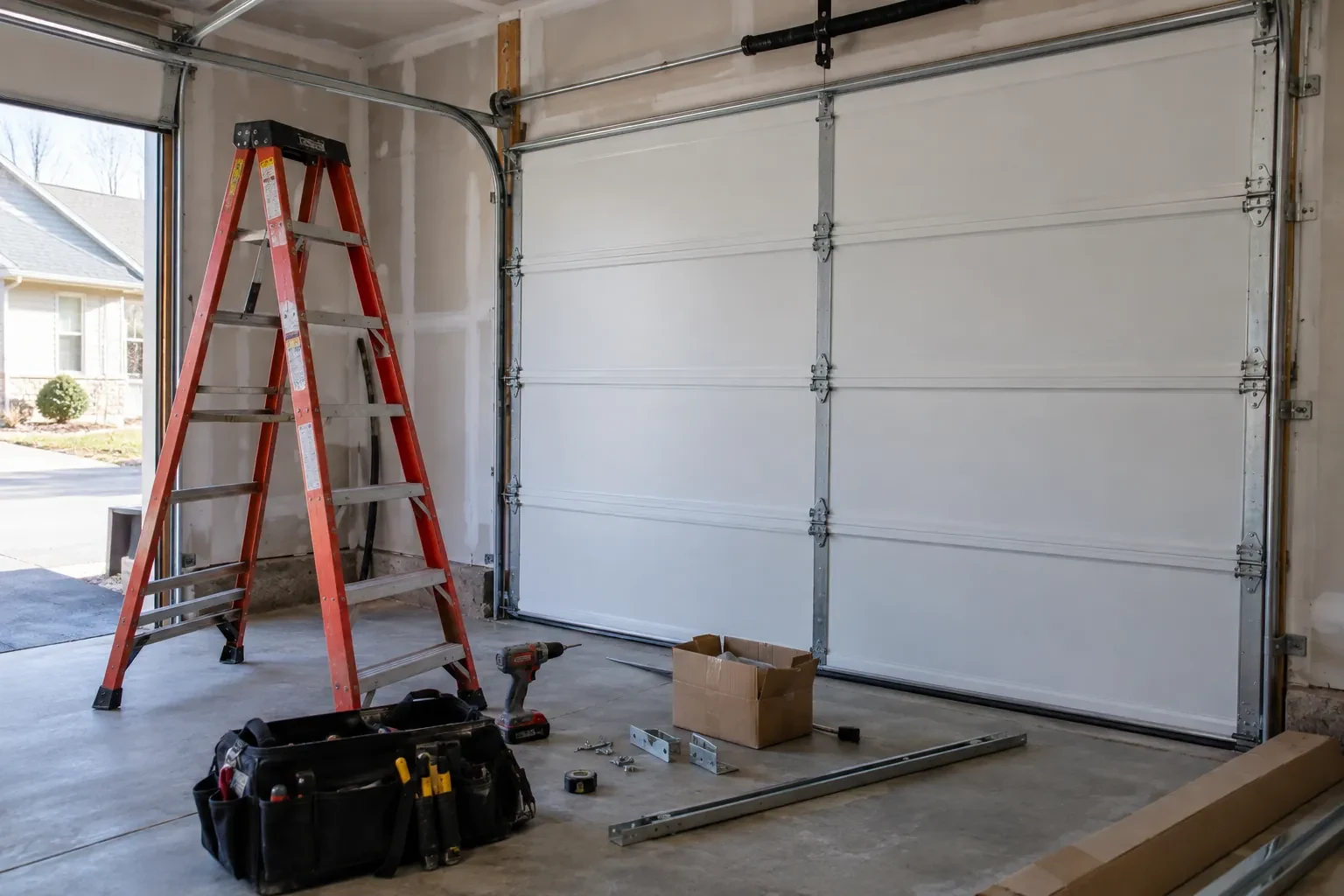
Good advice is worth more than a sales pitch. In this section we explain how doors and openers work, what wears out and why, and how to tell a small job from a big one.
- Bulletin 1Garage Door Tune-Up: preparing for the visitHalfway up, the door shudders. The sections seem to catch for a moment, the whole assembly shakes, then it carries on as if nothing happened.Read
- Bulletin 2Garage Door Balance Adjustment: inside the visitWhat you get back is a door that lifts with light, even effort and a written note of how it was set. It holds still at knee height, at waist height and fully open, closes onto the floor gently along its whole length…Read
- Bulletin 3Garage Door Roller Replacement: comparing quotesA heavier door needs rollers with a load rating to match, generally ball-bearing rollers rated around seventy-five to one hundred pounds each rather than the light plastic wheels many doors ship with. It often needs…Read
Things people wonder
Repair & Maintenance
Will the springs be adjusted while you are there?
No, and that is deliberate. An inspection reads the counterbalance: the technician checks the coil, measures wire size and length, and watches how the door behaves by hand. If it is out of step with the door's weight, the report says so and by how much. Winding a spring is its own appointment, done once the door is clamped and the system is calm, which keeps the inspection record honest about the door as found. Garage Door Safety Inspection
Will the tune-up include replacing worn parts?
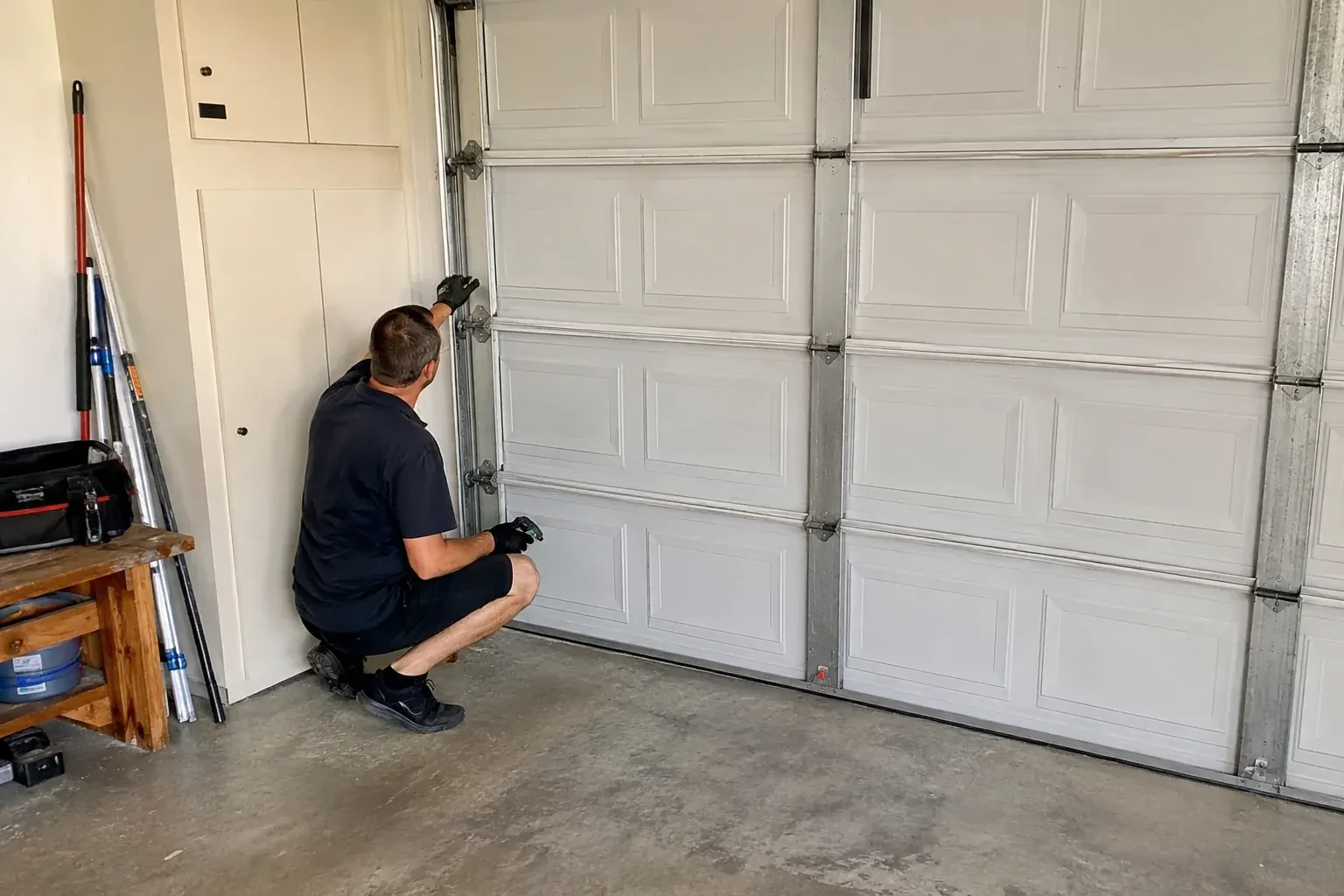
Small wear items found on the day, such as a roller or a hinge on a middle section, a bottom seal or a few fasteners, can often be replaced during the visit if you agree and the part is on the truck. Larger items, including springs, cables, drums, bottom brackets, a bent track or an opener gear, are written up as separate repairs with their own quote so you can decide with the facts in hand rather than under a raised ladder. Garage Door Tune-Up
Will the opener need adjusting afterwards?
Sometimes, but not always. Once the door runs true by hand, the trolley is reconnected and the opener is checked against its own travel limits and force; those are only reset if that check shows they have drifted, since many openers need no force change after a repair like this. The reversal is then checked against a block laid in the door's path and by interrupting the photo eyes from a safe distance. If the opener strained hard during the event, its arm and bracket are checked too. Off-Track Garage Door Reset
Does changing a section affect the springs or balance?
It can. A new section may be a little heavier or lighter than the old one, particularly if insulation, glazing or a strut differs, and the springs are set for the door's actual weight. After the exchange the technician lifts the door by hand with the opener disconnected and adjusts the spring tension until it holds steady at mid-height. On a bottom-section job the springs are unloaded and reloaded as part of the work anyway. Garage Door Panel Replacement
Springs & Hardware
What is the difference between two-inch and three-inch rollers?
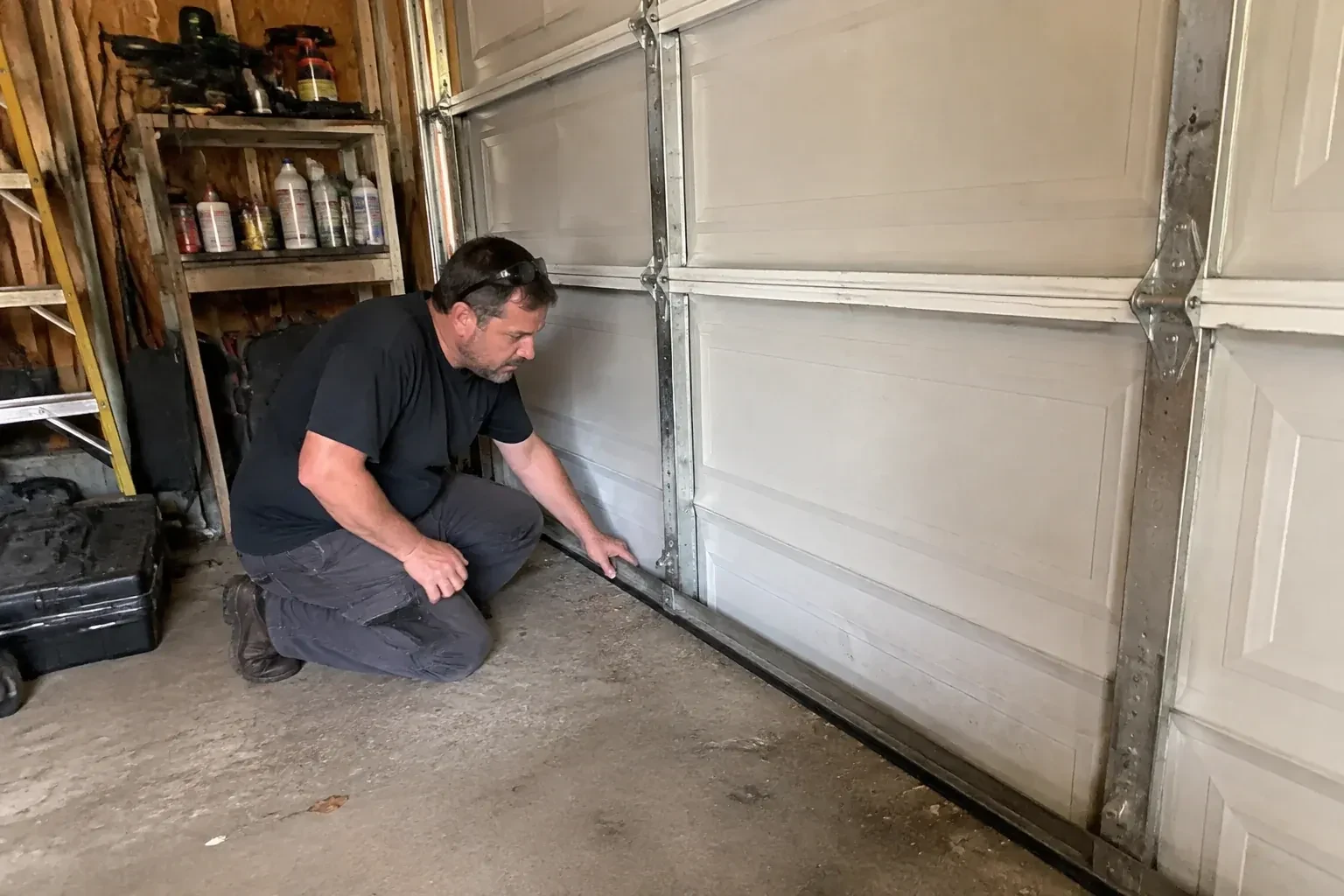
The figure is the wheel diameter, and it has to match the track. Residential sectional doors run on two-inch track and take a two-inch wheel; commercial doors can run on either two-inch or three-inch track, so the wheel is matched to what is actually installed. Wheel size has little to do with noise, which comes from the wheel material and bearings. The technician measures the track and the existing wheel before ordering so the set fits, since a mismatched wheel either jams in the channel or rattles around in it. Garage Door Roller Replacement
Why did the hinge crack in the first place?
Steel flexed often enough eventually cracks, and several things speed that up. A door out of balance is dragged by the opener, and every hinge takes the strain. A seized roller twists its hinge on each trip. A track out of line pinches the panels at the curve. A wide panel without a strut flexes at the joint. Corrosion at the low hinges thins the steel. The technician looks for which of these was at work so the new hinge is spared the same stress. Garage Door Hinge Replacement
My door rubs the frame on one side. Is that a track problem?
Often, yes. The vertical track is meant to stand a fraction further from the jamb at the top than the bottom, so the closed door seals on its stop and swings clear as it rises. If a bracket has loosened or the track was set flat to the wood, the door drags along the stop moulding every trip. Resetting the spacing and taper, and tightening the brackets into sound wood, usually ends the rub. Garage Door Track Repair or Replacement
What information helps when I call?
Whether the door is sitting crooked, jammed partway or on the floor; whether you can see a cable hanging loose, frayed or wrapped around the shaft; whether there is a spring above the door or springs along the tracks; the door's rough height and whether it is a single or double; and what happened just before, such as the door coming down on something. A photo of the drum end and the bottom corner is useful. Garage Door Cable Replacement
Openers & Access
How do you tell whether it is the opener or the door?
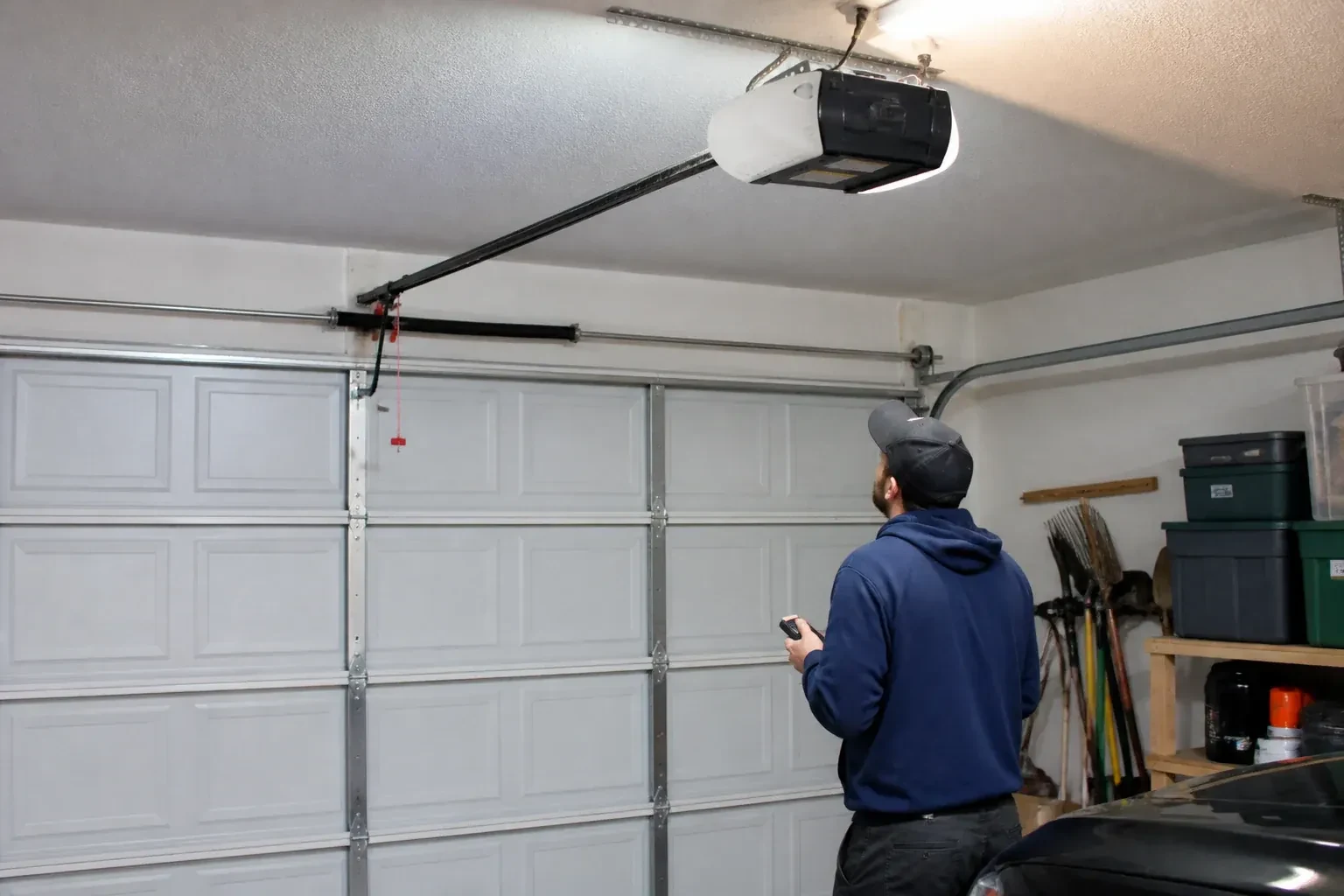
By separating them. With the door closed, the emergency release is pulled so the opener is out of the picture, and the door is lifted by hand. A balanced door rises without strain, hangs where you leave it around waist height and stays open at the top. If it does, the opener is at fault. If it is heavy, drifts or binds, the door is the cause and the opener was only reporting the strain. This one check prevents a great many wrong repairs. Garage Door Opener Diagnosis and Repair
Should I use the slide lock on the door with a chain drive?
No. The manual slide lock on the door is disabled or removed once an operator is connected, and the technician checks that during the repair. A motor pulling against a locked door strains the chain, strips the drive gear and can bend the top section of the door. If you want the door secured against remotes, the lock button on the wall control switches them off, and a track lock designed to work with an operator does the rest. Chain-Drive Opener Repair
How long should a belt last once repaired?
A belt's life is counted in cycles and years, and on a balanced door with the rail straight and the tension right it runs for many years. What shortens it is a heavy door, an over-tight adjustment, a bent rail rubbing one edge, or grease on the rubber. Keep the door balanced and lubricated, the belt dry, and glance along the rail a few times a year. Belt-Drive Opener Repair
Why does the technician test the door by hand before anything else?
Because the opener depends on the springs. With the old unit disconnected, a balanced door lifts with moderate effort and stays put at roughly waist height. A door that drops or drifts is telling the technician the springs need adjusting, and doing that first means the new operator is never asked to haul a heavy door, which would shorten its life and mask a problem that belongs to the door. Garage Door Opener Replacement
Installation & Upgrades
How can I tell if the balance has changed later?
During a planned manual check, a meaningful change may appear as a door that feels much heavier, will not remain controlled at an intermediate position or begins moving unevenly. New cable slack, rubbing or abrupt travel also deserves attention. Note the position and behaviour, then keep the door still for a technician's assessment. Sectional Garage Door Replacement
What if there is very little room above the opening?
Low headroom can often be addressed with a track arrangement designed for the available space. Accurate measurements are essential because the top section, track curve, springs and opener all compete for clearance. The installer maps ceiling obstructions and selects a supported configuration from the door system options. Storage or lighting may need repositioning to preserve the required travel zone. Insulated Steel Garage Door Installation
What should I watch for during strong winds?
During strong or severe winds, shelter in a basement or small interior room away from windows, doors and exterior walls, rather than watching the door while it blows. Once conditions have passed, look over the opening: note unusual bowing, new creases, displaced rollers, loose attachments, perimeter gaps, or movement at brackets and jambs, and let these details guide a later assessment. Wind-Rated Garage Door Replacement
How often should I inspect the installed door?
Regular visual checks are useful, with the owner's information setting the specific test and lubrication schedule. Watch the door travel, keep tracks and photo eyes clear, and look at rollers, hinges, cables and seals without adjusting tensioned parts. A change in balance, sound or movement is useful information to record and share when arranging maintenance by a door technician. Carriage-House Garage Door Installation