Sound familiar?Cambridge
- The call
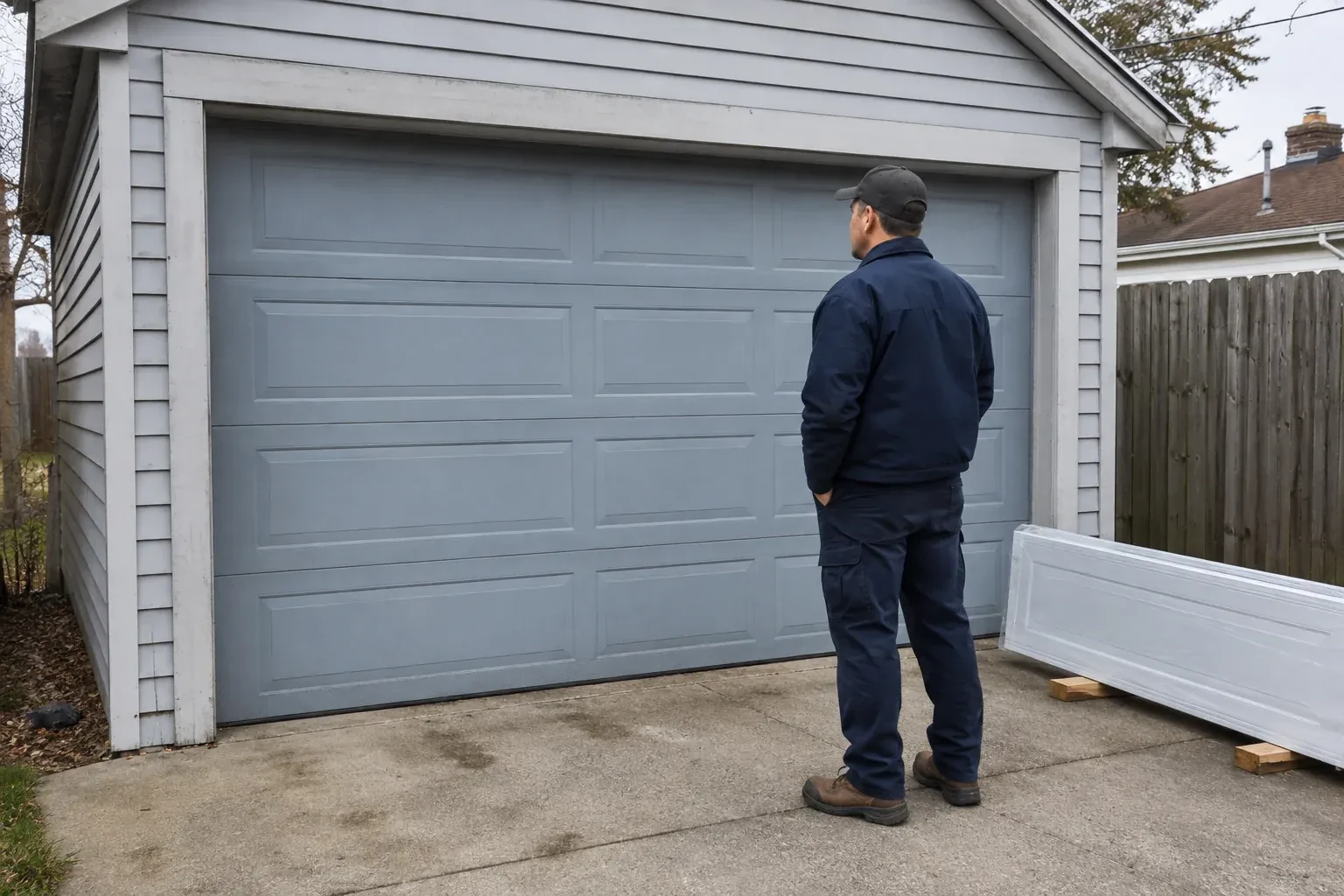
- Each opening cycle brings a metallic knock followed by a shudder through the horizontal track. The sound grows near the curve, where a worn roller and loose hinge allow the section to shift under load.
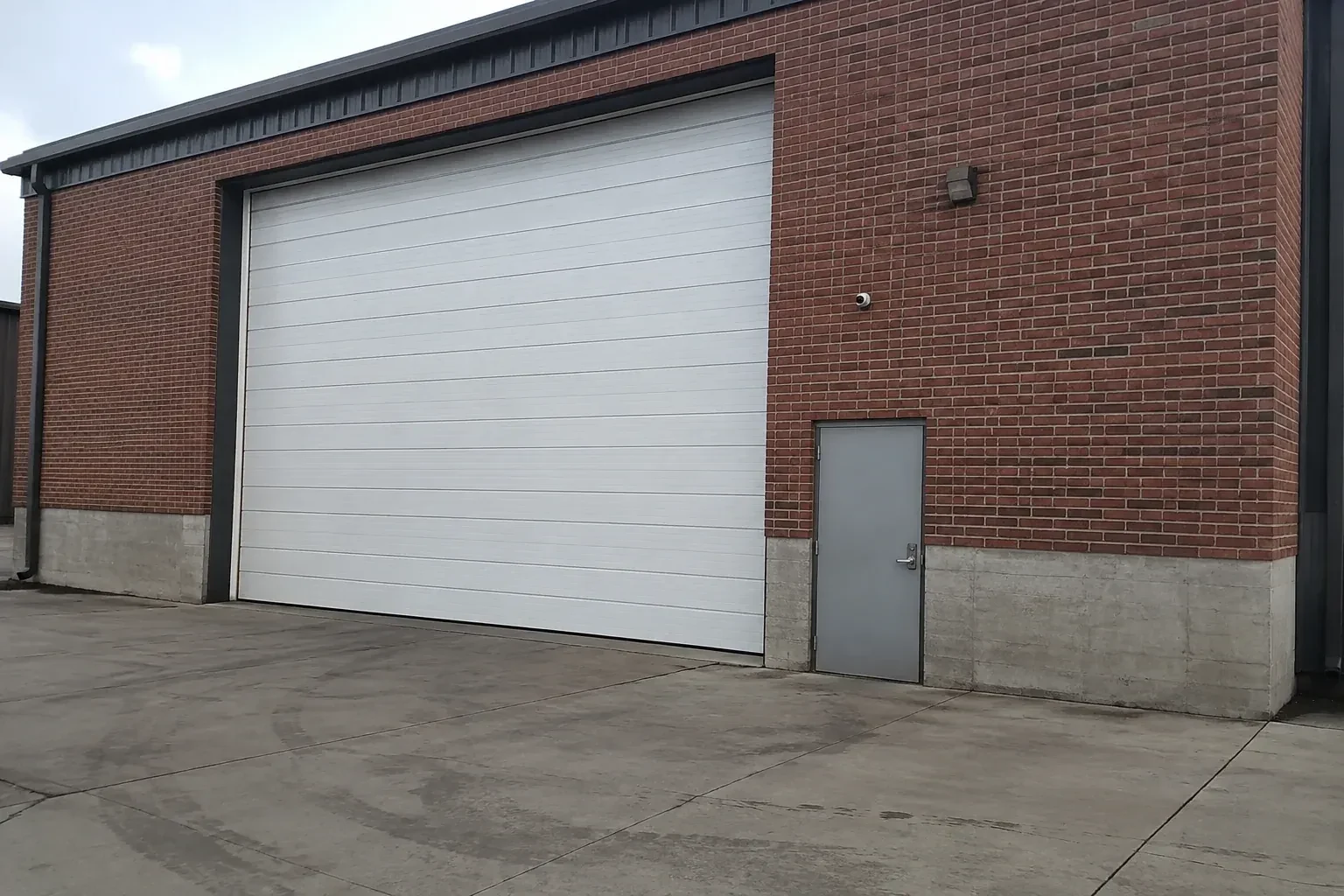
Commercial sectional door repair addresses the connected parts that guide, balance, seal and power a hinged overhead door. The visit begins by securing the opening and identifying whether the trouble started with impact, wear, corrosion, alignment or the operator. Sections, track, hinges, rollers, cables, springs, drums and controls are then checked as a complete system. Compatible parts are fitted, geometry and balance are restored, and the assembly is cycled through its working range so the bay returns to predictable operation.
Sound familiar?Cambridge
Commercial Sectional Door Repair · Cambridge
Scene 1
When the motor hums, stalls or strains, the door itself is assessed before settings are changed. With the system safely placed for manual evaluation, the technician checks whether the door moves freely and remains controlled through its range. Spring condition, cable wraps, rollers, track obstructions and any active lock are reviewed. Only after the mechanical load is understood does attention move to the drive chain, sprockets, clutch or brake, travel limits and controls. This sequence separates an operator issue from resistance created elsewhere in the assembly.
Scene 2
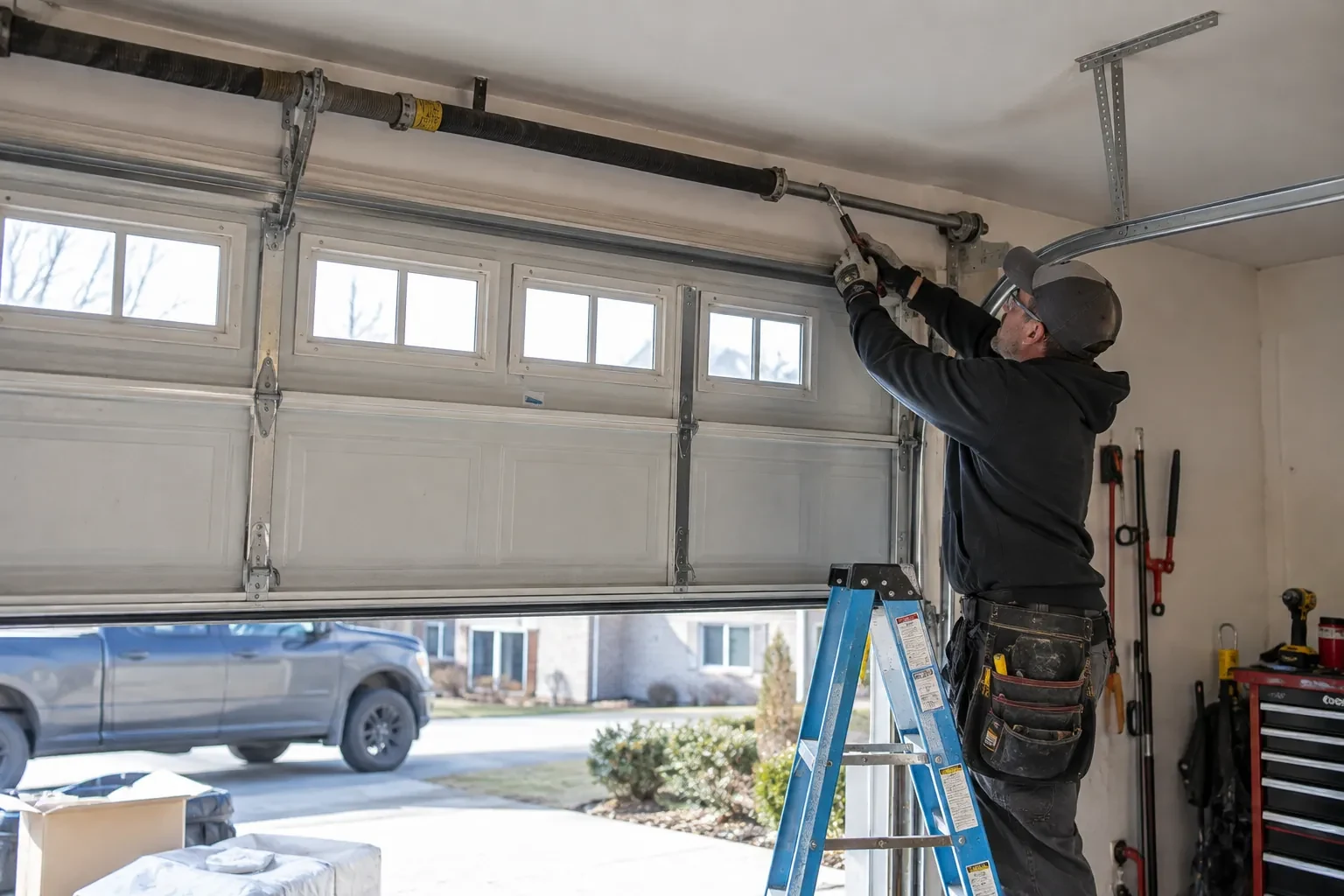
Cable and spring work is performed with the door secured and spring energy under deliberate control. Matched lift cables are routed from sound bottom fixtures to compatible drums, seated in their grooves and brought to equal tension. Bearings, shaft alignment and anchor points are checked before springs are set for the actual door weight and lift configuration. The technician then evaluates balance at several positions. A level bottom edge and stable movement show that both sides are sharing the load as intended rather than relying on the operator to pull the door straight.
Scene 3
A replacement panel leaves the door with continuous joints, secure hinges and reinforcement suited to the opening. Colour and surface texture may show normal differences between new and weathered material, while the functional check focuses on articulation, roller clearance and even contact at the seals. Washing the exterior with products allowed by the door manufacturer helps protect the finish. Future impact marks near an end stile or bottom fixture deserve early attention because these areas connect the panel to the guidance and lifting systems.
What shapes the quoteHespeler Door & Opener Co.
FeesSame any hour
Keep the door asset number, date, reported symptom, diagnosed cause, parts installed, adjustments made and functions tested. Spring, cable, panel and operator identifiers are especially useful for later service. Notes about impact location, corrosion or unusual cycle demand add context. A precise record helps facility staff compare future changes and prepare relevant information for the next visit.
That depends on the location and degree of deformation. A minor change in an accessible straight section may be corrected while restoring spacing and support. A sharply creased rail, damaged curve, opened seam or track that can no longer hold the roller securely usually calls for a compatible replacement. Brackets, anchors and adjoining track are checked either way.
Surface condition and remaining material determine the scope. Light contamination may be cleaned during maintenance, while pitted cables, weakened brackets, seized rollers or compromised fasteners are replaced with compatible components. The source of moisture is considered too. Clearing drainage, renewing seals and removing accumulated salt help protect the repaired lower section and its hardware.
WaterlooOntario
Every square is one home in a hundred.
On-site assessment
Each opening cycle brings a metallic knock followed by a shudder through the horizontal track.
(226) 887-1169, open 24/7.
On-site assessment preferred · (226) 887-1169, open 24/7