Sound familiar?Hespeler
- The call
- The rolling door starts upward, then one side rises ahead of the other. Its bottom bar sits on an angle, several slats scrape the guide, and the opening is no longer clear enough for normal shipping traffic.
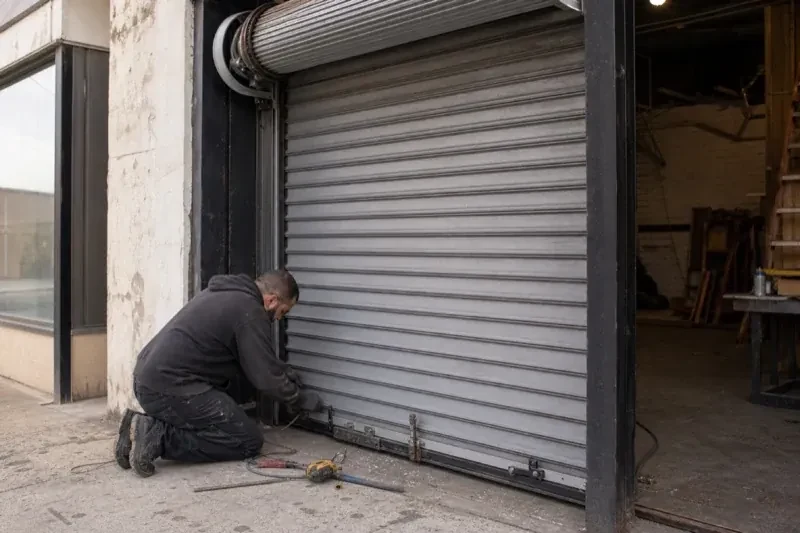
The hand chain takes far more effort than it did last month. The curtain feels heavy from the first pull, pauses around mid-travel, and settles downward instead of holding a steady position.
The useful decision is not simply repair versus replacement; it is which path fits the identified curtain, structure, duty and operating system. Localised slat, guide, seal, chain or control faults often support a component repair. Widespread curtain distortion, repeated impacts, worn major assemblies or an operator that no longer suits the door's use may justify a broader plan. Measurements, model information, fire-rating status and the condition of connected parts make that choice concrete. The quote can then separate the current authorised work from optional improvements such as added vehicle detection, guarding or revised controls.
Sound familiar?Hespeler
Commercial Rolling Door Repair · Hespeler
Scene 1
Exterior openings collect evidence from their surroundings. Salt staining at the lower guides, packed grit near the sill, torn astragal, rust below a hood seam and polished marks at forklift height each tell a different story. Ice may hold the bottom bar down, while wind can press a broad curtain against its guides and change operating effort during a storm. The technician notes drainage, exposure and recurring traffic contact alongside the mechanical findings. That context helps shape a durable repair and can support practical additions such as guide guards, clearer floor markings or better threshold housekeeping.
Scene 2
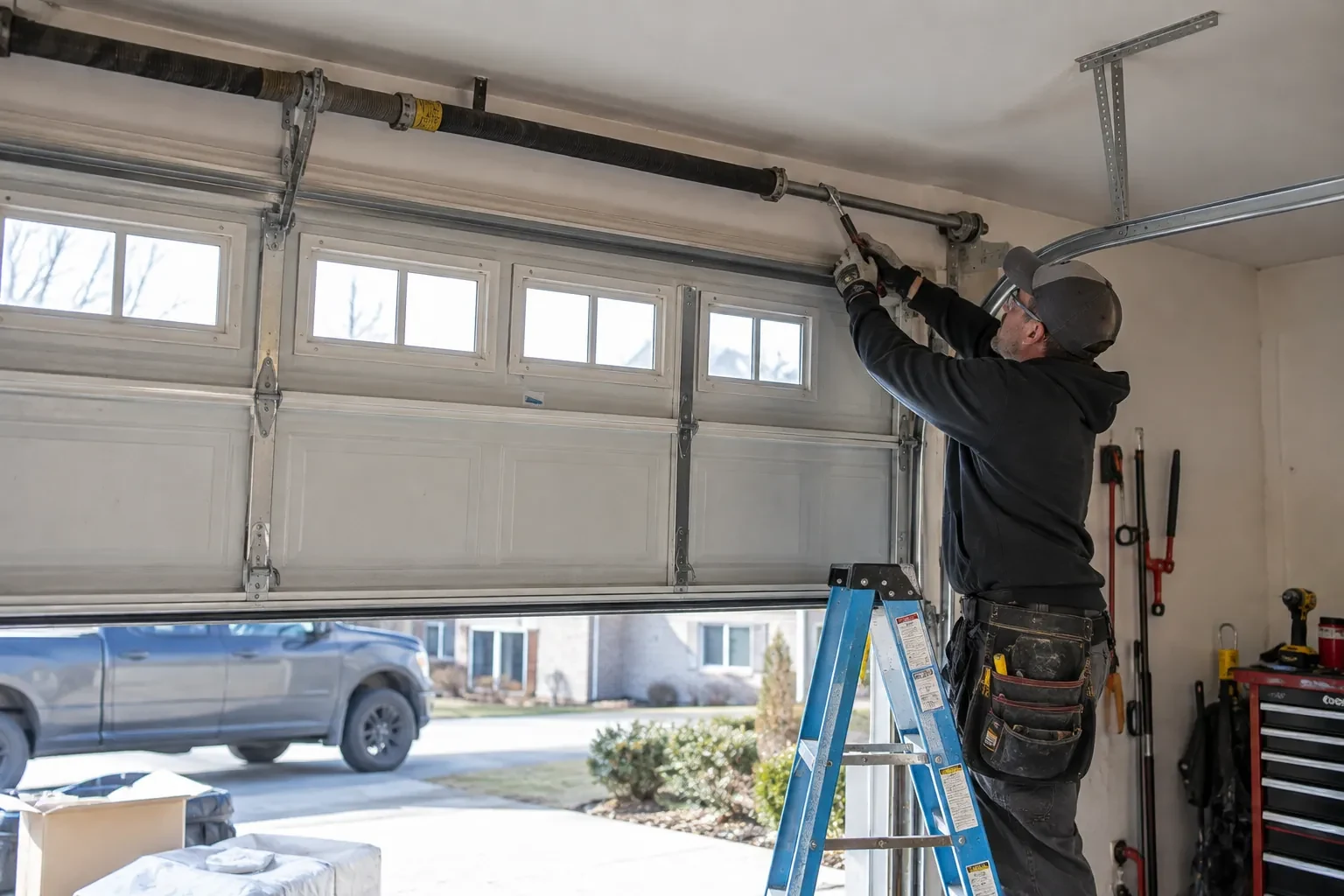
Repair starts by establishing a stable mechanical state. Power is isolated under the site's procedure, the operating controls are kept from use, and the work zone remains controlled. Depending on position and construction, the curtain is lowered, clamped, blocked or supported with suitable lifting equipment before a guide, bracket or drive part is loosened. Manual chains are secured and counterbalance components are treated as energised. This setup gives the technician control over weight and movement, allowing later adjustments to be deliberate. It also protects nearby stock and equipment while the opening is temporarily out of normal service.
Scene 3
The closed door meets the sill evenly, which lets the bottom seal, slide bolts and keepers do their jobs without staff pulling the curtain sideways. Locks are demonstrated only after alignment and limits have been settled, and any operator interlock is included in that demonstration. The person responsible for closing can see the sequence: bring the door fully down, confirm contact across the threshold and engage the intended hardware. Keeping the sill clear of pallet wrap, ice and loose debris helps preserve that result, while a lock that begins missing its keeper becomes an early alignment clue rather than a nightly struggle.
What shapes the quoteHespeler Door & Opener Co.
FeesSame any hour
A photoelectric beam may be blocked, a sensing edge may be active, the curtain may meet resistance, or the operator may be responding to a monitored-device or limit condition. The inspection keeps these possibilities separate. Sensor placement, alignment and response are checked alongside free mechanical travel and the operator's documented control logic.
Staff can observe bottom-bar level, new dents or rub marks, guide debris, loose visible fasteners, torn seals, sensor cleanliness, unusual sounds and changes in operating effort. They can keep the sill and doorway clear and record impacts. Spring tension, bracket release and internal repairs remain controlled technician tasks because those areas involve curtain weight and stored energy.
Move vehicles, pallets and loose packaging away from both faces of the opening, and identify an alternate route for staff and deliveries. Provide access to the control station, disconnect and any door records. A facility contact who understands normal operation and can authorise testing makes it easier to reproduce the complaint under controlled conditions.
WaterlooOntario
Every square is one home in a hundred.
On-site assessment
The hand chain takes far more effort than it did last month.
(226) 887-1169, open 24/7.
On-site assessment preferred · (226) 887-1169, open 24/7