Skip to content
HespelerDoor & Opener Co.Open 24/7 (226) 887-1169
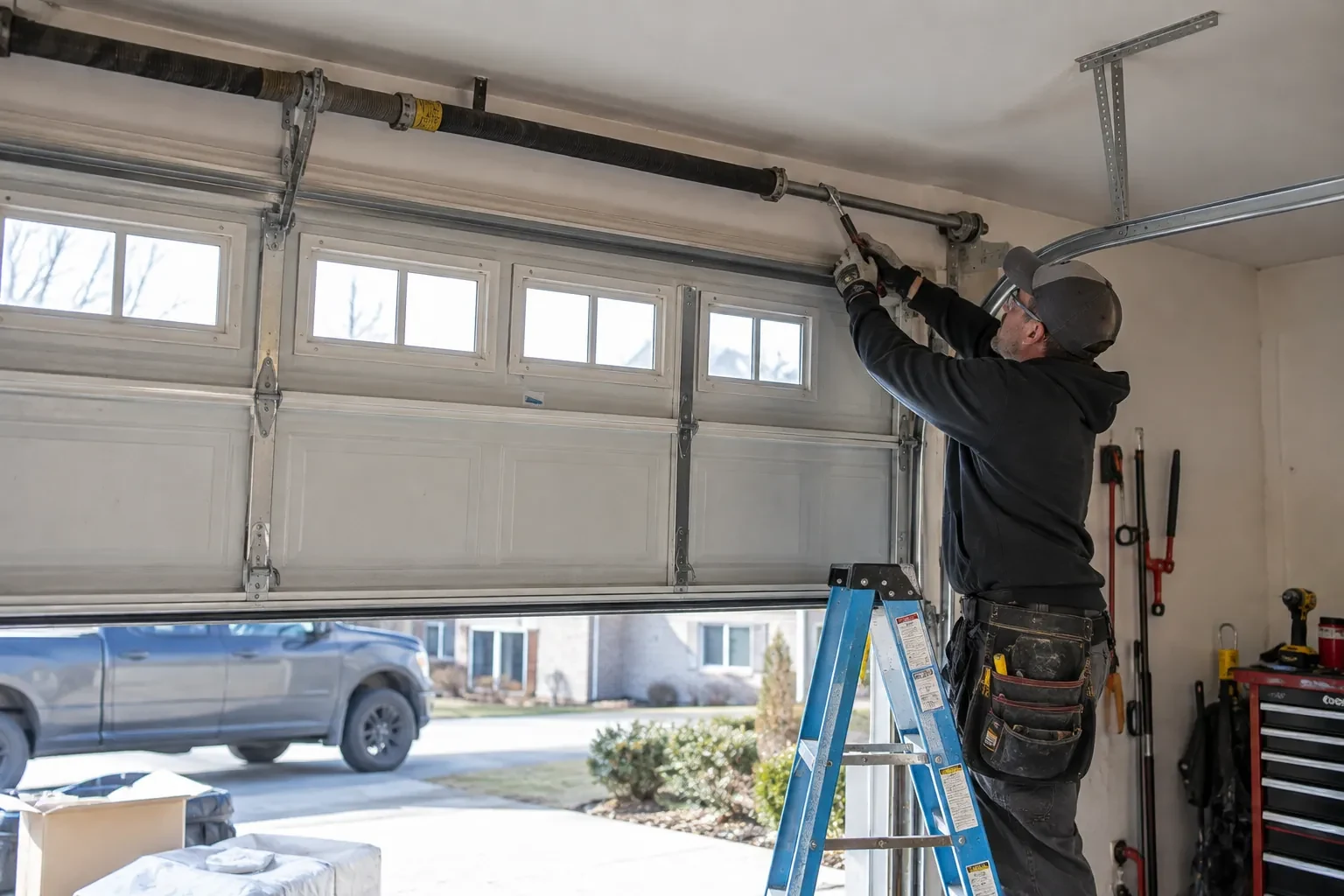
Technician on a blue stepladder using a wrench on a black torsion spring bar above a sectional door with small windows. — Preston

Openers · Preston

Emergency Release Repair

Your garage is detached and has no side door. The remote is dead, the keypad is dead, and the small round lock in the top panel is meant to be your way in.

In plain words

The operator standard for residential openers in this country asks for a manual release that is coloured red, easy to tell apart from the rest of the mechanism, and reachable from the floor, with the handle no more than about 1.8 metres up. The reason is plain: in an outage or emergency, someone who has never touched the opener must be able to find and use it. Emergency release repair brings an opener back to that standard when the handle has gone missing, been tied out of reach, or was left too high after a door change, and leaves the household knowing what the red handle is for.

Sound familiar?Preston

The call
Since the new door went in, the red handle has hung just below the ceiling, a stepladder's height above anyone in the household. During last week's blackout your daughter stood under it with a broom, unable to hook it down.
NextHow the visit goes

Emergency Release Repair · Preston

How the visit goes

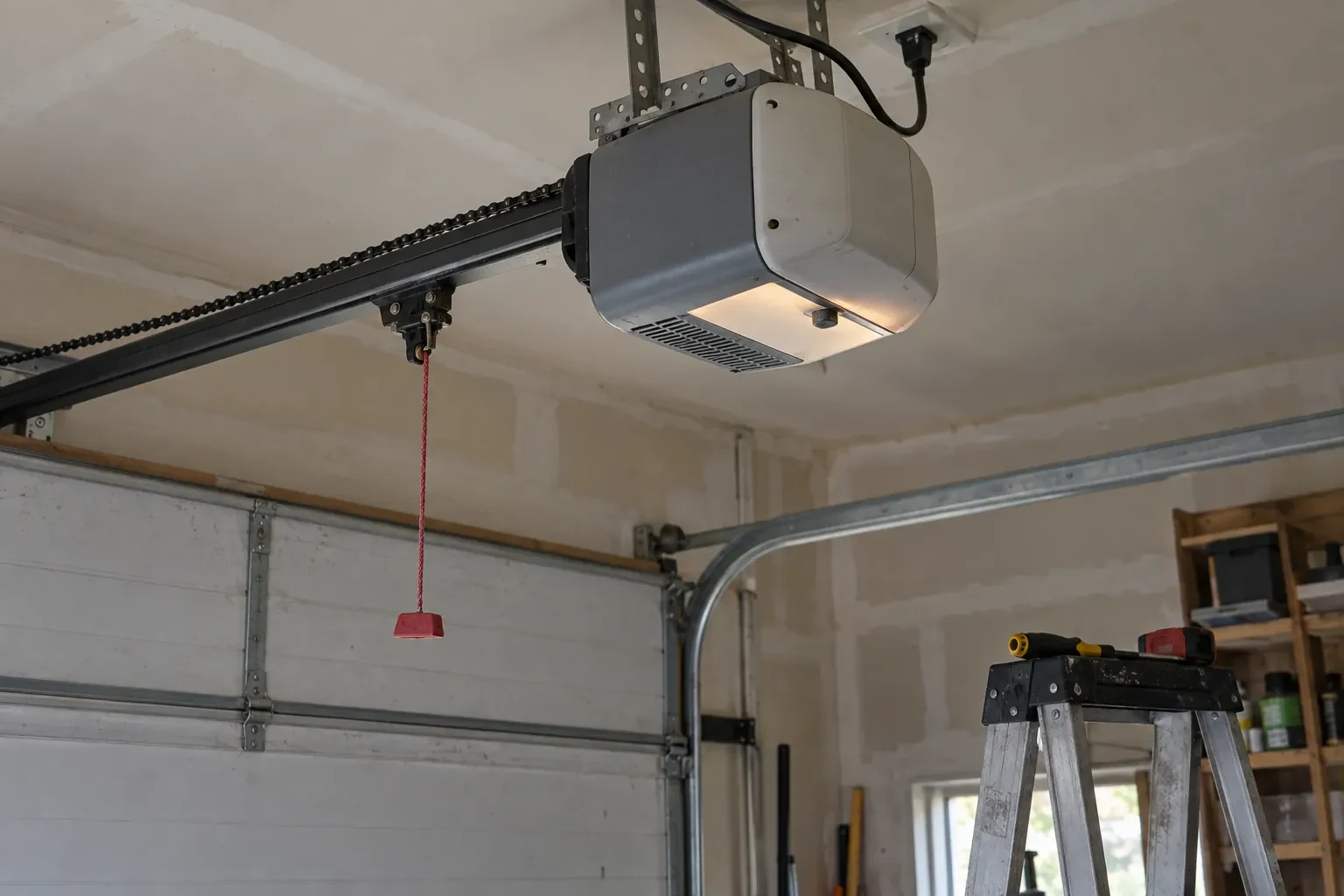
Chain-drive opener hanging from the ceiling with a lit lamp lens and a red pull cord, above a gray door and ladder. — Preston
  1. Scene 1

    How the door behaves on its own

    The release is then pulled with the door closed and the door is lifted by hand, using the door's own handle or a gripping point clear of the section joints. This is the balance test, and it decides the order of the work. A door that rises with modest effort, holds at about a metre and stays fully open is ready for release work. A door that feels heavy, sinks back or springs upward is telling the technician that the counterbalance needs attention first, and the release is left disconnected until that is done. Manufacturers and the industry checklist both put this test ahead of any further use of the release.

  2. Scene 2

    A new cord and handle at the right height

    A cord that has frayed, rotted in the sun or snapped is replaced with a rope and red handle kit made for openers. The rope is tied to the release lever with a knot that will not slip under a hard pull, then cut so the handle hangs no higher than about 1.8 metres above the floor and clears the vehicle roof. The handle sits where it can be seen from the door into the house, and any storage that crowded it is pointed out to you. A red handle that is easy to tell apart from everything else on the ceiling is what the standard asks for, and it is what the technician leaves behind.

  3. Scene 3

    Through the winter

    A release serviced in autumn is set up for the season the household is most likely to need it. The cord is rope that stays supple in the cold, the outside cylinder has been cleaned and lubricated, and the door has been proven to lift by hand with the bottom seal freed rather than frozen. Keep snow and ice cleared from the threshold so a manual lift is not working against a seal stuck to the slab, and keep the slide bolt or manual lock handy for nights when the door is in manual mode. A door that moves by hand is a door that gets you out.

In the van

  • 2x4 offcut for the reversal test
  • Release lever and spring
  • Chain or belt tension hardware
  • Outside key release kit (lock, cable, keys)
  • Rope and red handle kit

What shapes the quoteHespeler Door & Opener Co.

Extra keys and a lockbox
Two keys come with an outside release. Additional keys cut for family members, or a small lockbox for the spare, are small add-ons listed as separate lines.
Demonstration and labelling
Walking the household through the release, fitting a fresh warning and instruction label near the wall control, and adding handles or gripping points to the door are small tasks that are itemized when they are part of the visit.
Opener type and rail
A chain or belt unit on a one-piece rail, a sectional square rail, a screw drive and a wall-mounted opener each use a different release part, and the part sets the shape of the job.

FeesSame any hour

Have it ready

Before you call · 0 / 3

(226) 887-1169

Things people wonder

Why should the door be closed before I pull the handle?

Because once the trolley lets go, the door is held only by its springs. A well-balanced door will stay put wherever it is, but a door whose springs are tired can drop, and one that is over-tensioned can rise on its own. Even with the door already on the floor it can still move unexpectedly, so keep the opening clear whenever the release is pulled. The industry checklist and opener makers give the same instruction: disconnect with the door fully closed.

What happens if someone pulled the release while the door was open?

Sometimes nothing, if the door is well balanced and stayed where it was. If the door came down on its own, the technician checks what took the impact: the door arm, the carriage, the bottom brackets, the rollers and the panel around the arm bracket. A bent arm or carriage is replaced, and the balance test shows whether the springs contributed. Then the release is reconnected with the door closed and the household is shown the right sequence.

Is the red handle safe with children around?

The handle has to be reachable from the floor, so it is not a thing to hide. What keeps children safe is understanding and habit: explain that the handle is for adults and for outages, keep remotes out of small hands, and mount the wall control about a metre and a half up. Never rely on balance alone if a child does pull it; keep the doorway clear and treat the release as an adult tool, which is one more reason the balance test matters.

Prestoninformation

WaterlooOntario

Emergency Release Repair · Cambridge, Hespeler, Blair

Town
Preston, Waterloo
In business
32 years
Hours
Open 24/7
Nights, weekends and holidays, same fees
Visits
On-site assessment preferred. Request a visit or call.

2021 census: what it means at the door

Every square is one home in a hundred.

  • 48 in 100 homes · mixed ages
  • About 48% of homes in Cambridge were built in 1980 or earlier, according to the 2021 Census.Mixed neighbourhoods often include renovated older houses with a new facade and a garage door that no longer suits it. Choosing a door that ties the renovation together, then installing it plumb and balanced in an older opening, is work we do regularly and enjoy.
  • Single-detached houses make up about 57% of homes in Cambridge (2021 Census).A blend of housing means a blend of garages: spacious attached garages with full headroom on the detached lots, and tight tandem garages with little side room in the attached units. Openers, tracks and springs are all sized at the door rather than assumed from the street.

Source: Statistics Canada, Census Profile

Open Preston in Google Maps

On-site assessment

Request a visit.

Your garage is detached and has no side door.

(226) 887-1169, open 24/7.