Sound familiar?Preston
- The call
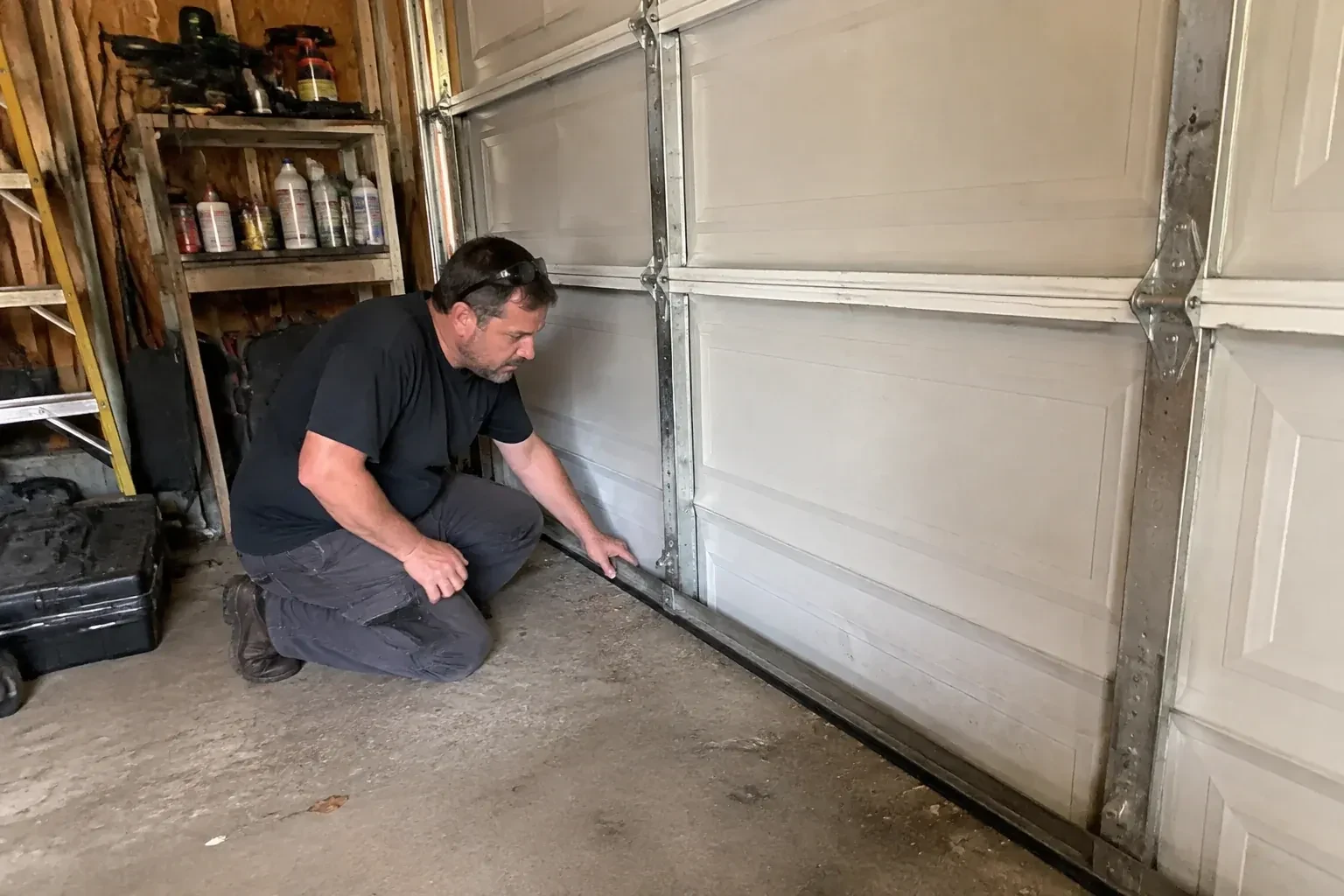
- Your older door has springs along the tracks, and one cable has slipped off its pulley and dangles slack. The door lifts crooked and needs a shoulder to close, when it used to glide.
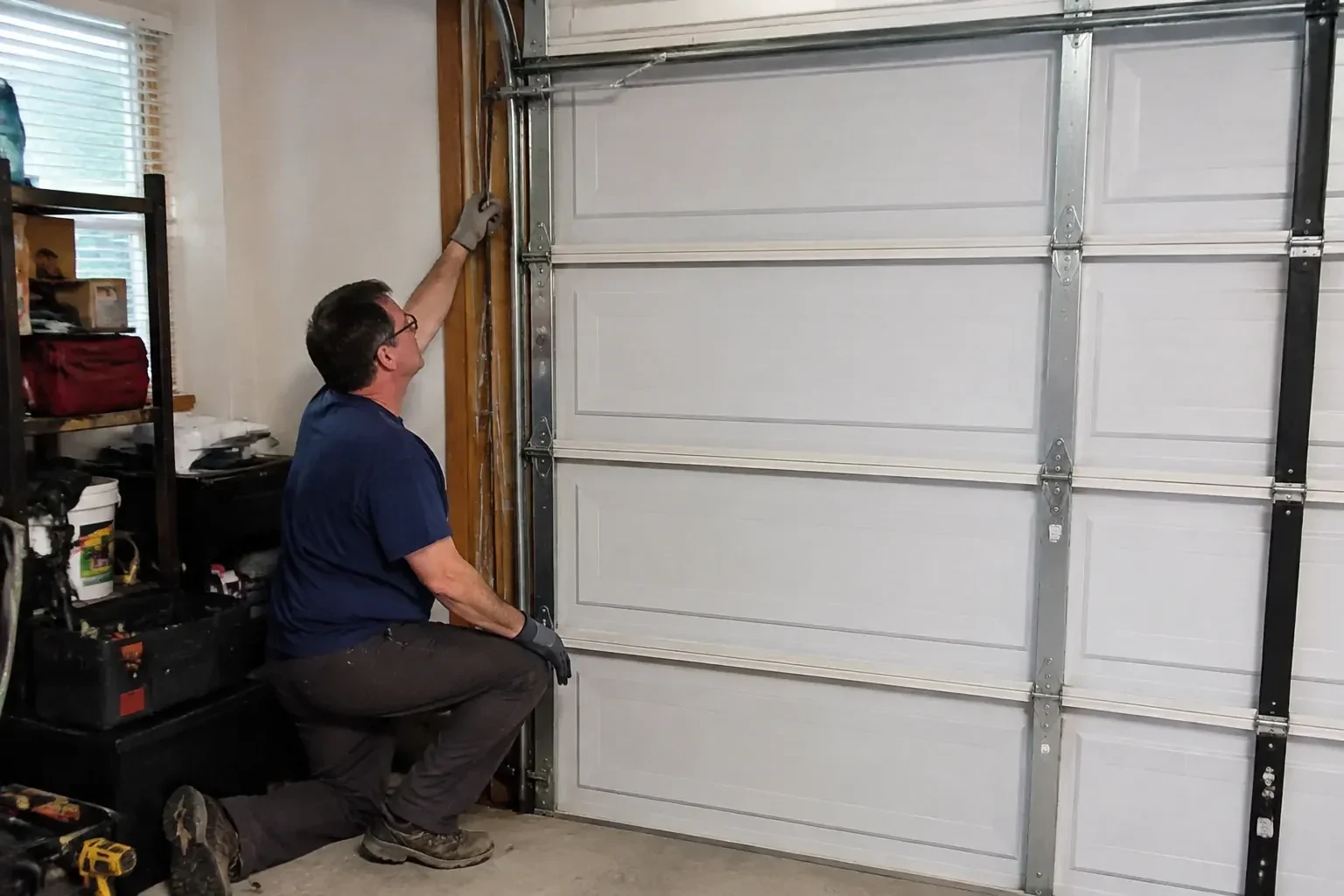
After years of slushy winters the cables look thinner near the bottom brackets, with rust streaks running down the door where they attach. The door still works, but the frayed wires catch your glove when you brush past.
Garage door cables carry the weight of the door as tension held by the springs, which is why the work follows a careful, well-rehearsed sequence rather than simply hooking a cable back on. On a torsion system the technician clamps the door, disconnects the opener and unloads the springs with winding bars before any cable, drum or bracket is touched; on an extension system the door is instead raised fully and clamped so its pulley-mounted springs relax. Once the system is unloaded, replacing the cables is straightforward: the correct length is set, and the counterbalance is tensioned and locked off by the method that system calls for.
Sound familiar?Preston
Garage Door Cable Replacement · Preston
Scene 1
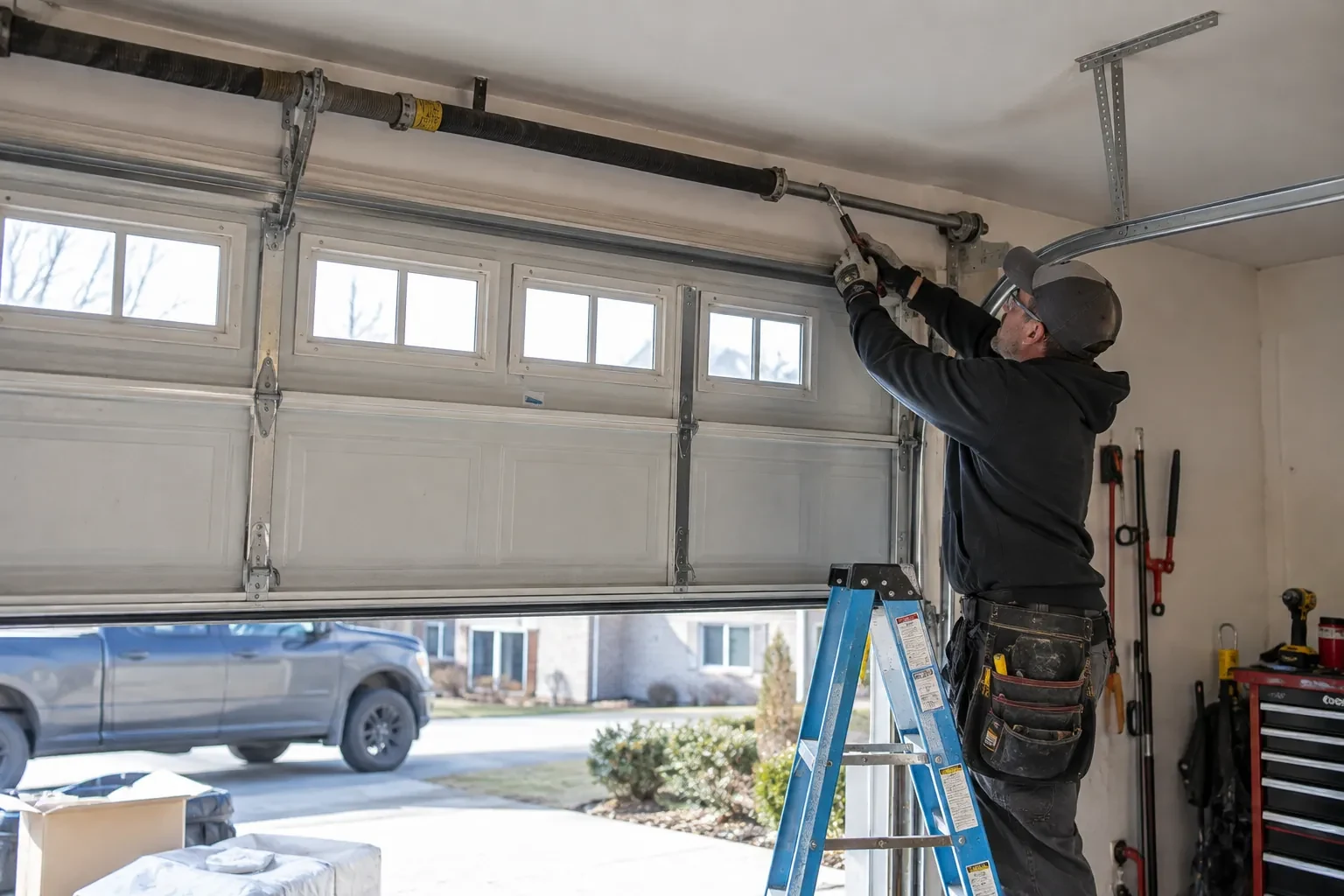
Cables only carry what the springs give them, so the springs are checked next. On a torsion system the technician looks for a gap in the coil that means a break, measures the wire and length to confirm the spring suits the door weight, and notes whether both springs on a double door match. On an extension door each spring is checked for stretch, a broken end or a missing containment cable through the middle. A weak or mismatched spring leaves one cable slack and the door heavy on one side, and if that is the story behind the cable, the spring work is explained and quoted alongside rather than left to surface later.
Scene 2
Where the inspection found a drum with worn grooves or a slipped set screw, or a bottom bracket bent by a bumper or eaten by salt, that hardware is replaced while the system is unloaded and the cables are already off. Drums are changed as a matched pair so both sides wind identically. A new bottom bracket is fixed with the correct fasteners into a sound part of the section, and the bottom roller is renewed if its stem or wheel is worn. Doing this in one visit adds a few minutes and avoids fitting fresh cable onto the very part that damaged the old one.
Scene 3
You can confirm the door is still balanced any time without touching a spring or cable. With the door closed, pull the opener's release cord so the trolley disconnects, then lift the door by its handle or a safe gripping point to about waist height and let go gently. A balanced door should not lift or fall far on its own; a little slow drift is normal, and what calls for a technician is rapid movement, a heavy feel, binding in the track, or a result outside the manufacturer's balance instructions, not drift alone. Reconnect the opener as the manual describes, usually by running it once. Doing this each season catches wear early and keeps the opener working lightly.
What shapes the quoteHespeler Door & Opener Co.
FeesSame any hour
Whether the door is sitting crooked, jammed partway or on the floor; whether you can see a cable hanging loose, frayed or wrapped around the shaft; whether there is a spring above the door or springs along the tracks; the door's rough height and whether it is a single or double; and what happened just before, such as the door coming down on something. A photo of the drum end and the bottom corner is useful.
Fraying is individual wires breaking, and it comes from two things: bending fatigue where the cable wraps the drum or pulley, and rubbing where it touches something it should not, such as a bent track edge, a rough drum groove, a seized pulley or a bracket sitting crooked after a bump. Corrosion speeds both. The technician looks for the rough edge so the new cable does not meet it.
A cable leaves its drum when it goes slack for a moment while the drum keeps turning. The usual reasons are the door closing onto an object or a ridge of ice so the bottom stops early, a spring that has lost tension or broken, or a drum whose set screws let it slip on the shaft. The technician finds which of these happened and corrects it so the new cable stays seated.
WaterlooOntario
Every square is one home in a hundred.
On-site assessment
After years of slushy winters the cables look thinner near the bottom brackets, with rust streaks running down the door where they attach.
(226) 887-1169, open 24/7.
On-site assessment preferred · (226) 887-1169, open 24/7