Skip to content
HespelerDoor & Opener Co.Open 24/7 (226) 887-1169
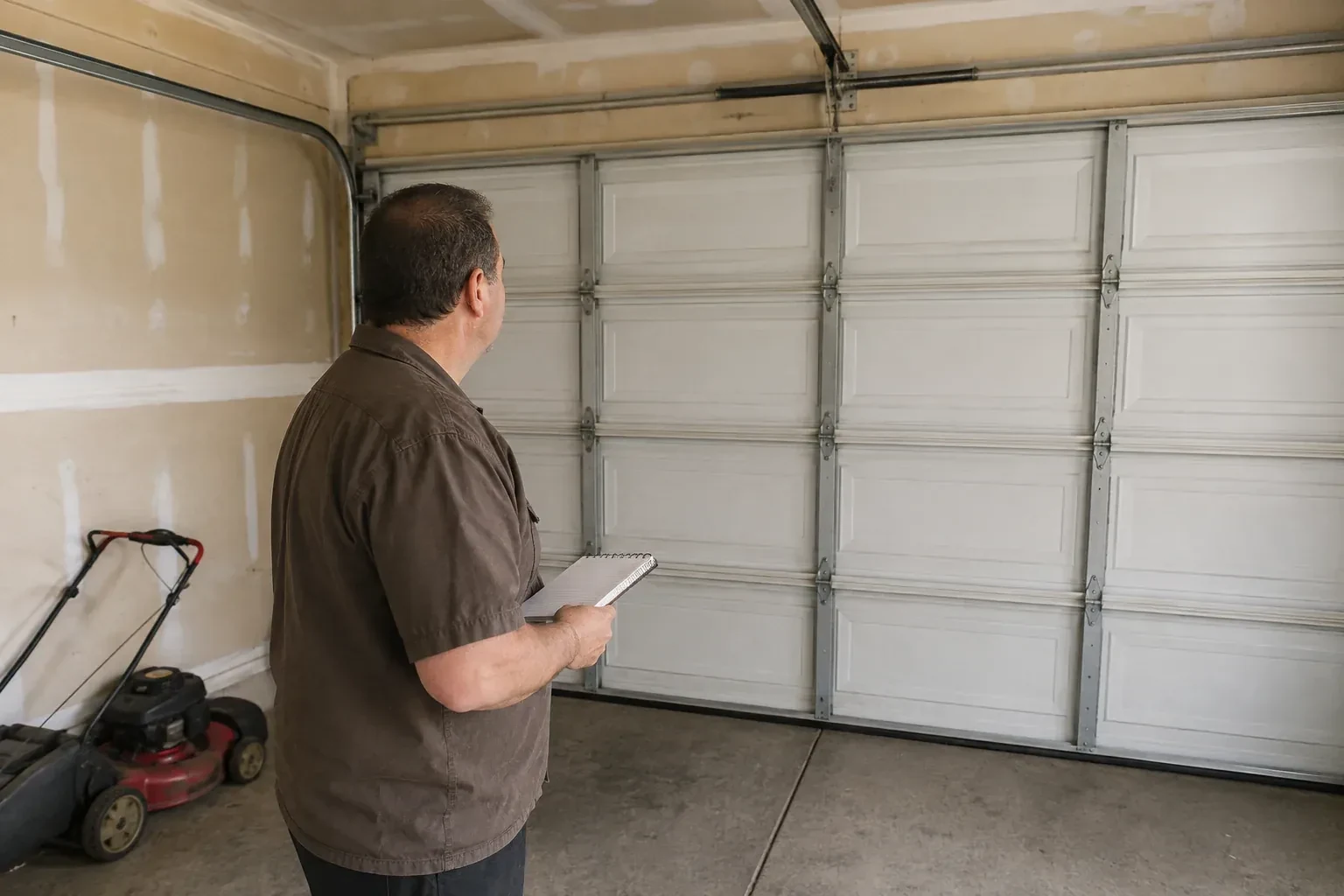
Technician holding a notebook while looking at a closed sectional door. — Garage Door Balance Adjustment, Cambridge

Springs · Cambridge

Garage Door Balance Adjustment

The opener has started to groan on the way up. The door climbs slowly, hesitates near the top, and on the way down it sometimes stops a hand's width above the floor and reverses, as if something were in the way when nothing is.

In plain words

An opener is designed to move a door that is already balanced, and every safety feature in it assumes that. The force it applies is limited so the door will stop and reverse when it meets something, and that limit only makes sense when the door is close to weightless. When springs lose tension, the opener has to lift real weight, its motor and gears work harder, and it may reverse or stall for no obvious reason. A balance adjustment puts the weight back on the springs where it belongs, so the opener can return to the light duty it was built for and its reversing behaviour is dependable again.

Sound familiar?Cambridge

The call
Released from the opener, the door will not hold anywhere. Lift it to hip height, take your hands away, and it sinks back to the concrete, gathering speed on the way down. Two years ago it used to hover exactly where you left it.
NextHow the visit goes

Garage Door Balance Adjustment · Cambridge

How the visit goes

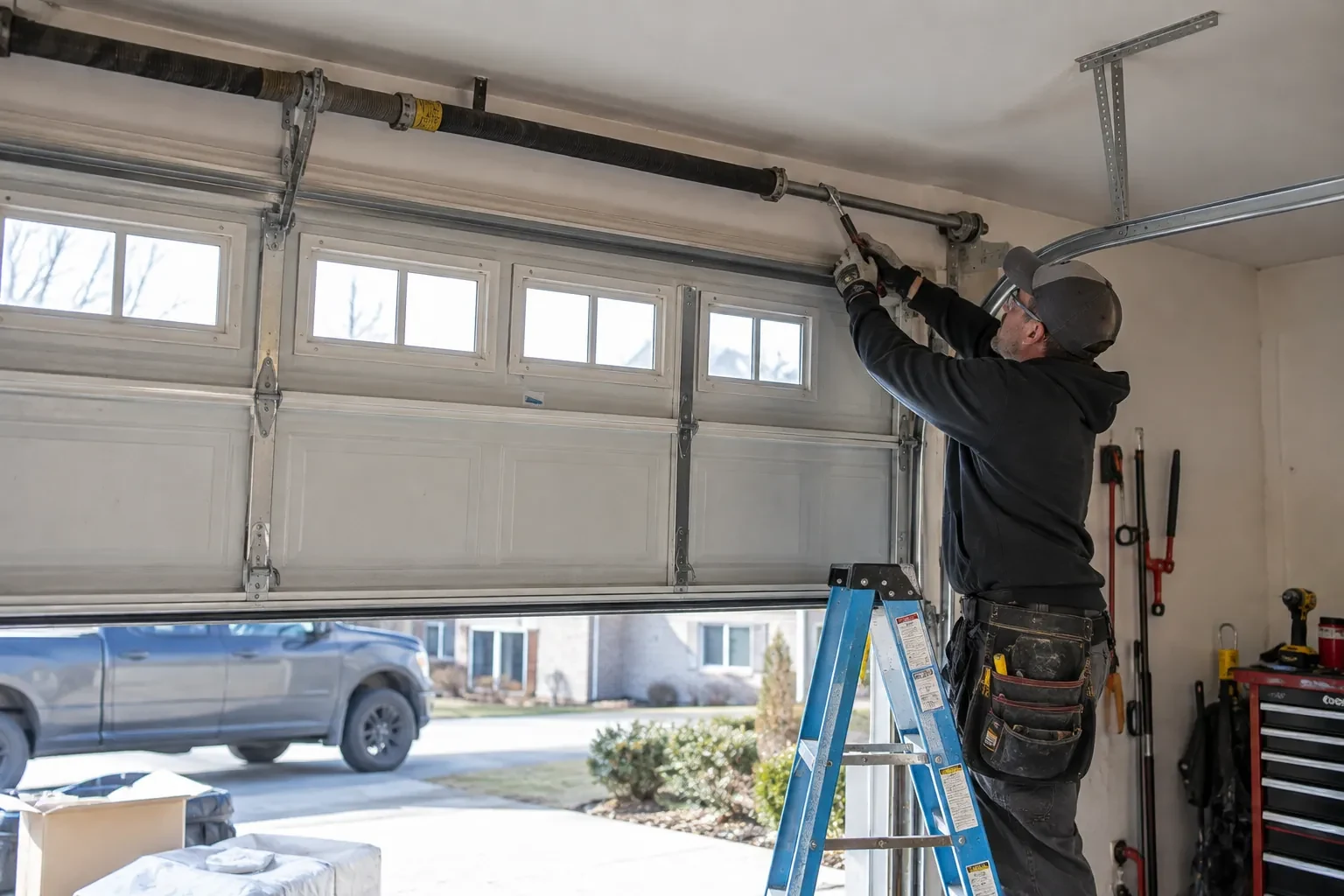
Technician on a blue stepladder using a wrench on a black torsion spring bar above a sectional door with small windows. — Cambridge
  1. Scene 1

    Releasing the door and reading how it behaves

    The assessment begins with the opener out of the picture. The technician closes the door, pulls the red manual release so the trolley disconnects, and lifts the door by hand to about a metre, then to full height, then lets it settle. A balanced door pauses wherever it is stopped; a door that climbs on its own has too much tension, one that drops has too little, and one that is fine low down but drifts up near the top can point to drum profile, cable length, uneven section weight or the spring's own characteristics rather than one single cause. How much effort the lift takes and whether it stays fully open are noted before anything is adjusted.

  2. Scene 2

    Adjusting extension springs at the hook

    On an extension system the door is opened fully and clamped so each spring hangs slack, and the tension is changed by moving the S-hook or the cable clip to a different hole in the track hanger, or by shortening the cable at the clip. A hole further back stretches the spring more when the door closes and adds lift; a hole further forward reduces it. Both sides are moved the same amount so the door stays level, and the pulleys and containment cables are checked as the hooks are reset. The clamps come off and the door is tested by hand at several heights, then adjusted again if needed.

  3. Scene 3

    The seasonal hand test you can do yourself

    You can repeat the balance test any time without touching a spring. With the door closed, pull the manual release cord so the trolley disconnects, lift the door by a handle or a safe gripping point to about a metre, and let go gently. A balanced door stays roughly where you leave it; one that creeps up or sinks has drifted and is worth a call before it becomes heavy work for the opener. Reconnect the opener as its manual describes, usually by running it once. Doing this at the start of each season, when the temperature changes, is the simplest way to catch a change early.

In the van

  • Nylon or steel rollers
  • Replacement hinges
  • Extension springs and S-hooks
  • Garage-door lubricant
  • Winding cone set screws

What shapes the quoteHespeler Door & Opener Co.

Cold-weather visits
In a cold snap, a frozen bottom seal or stiff hardware has to be freed and warmed before balance can be judged honestly, and a winter call is quoted with that in mind.
Weight added to the door
Insulation kits, windows or replacement sections may have taken the door beyond what its springs can carry. Weighing the door and specifying new springs to suit is quoted separately from a simple adjustment.
Torsion or extension springs
Winding a torsion spring with bars and moving an extension spring's hook are different procedures with different setup, and the type of counterbalance on your door is the first thing that shapes the quote.

FeesSame any hour

Have it ready

Before you call · 0 / 3

(226) 887-1169

Things people wonder

Why does the door feel heavier in winter?

Cold stiffens the lubricant in the bearings and hinges and firms up the rubber seals, so the door drags a little more and the springs have slightly more to overcome. A bottom seal frozen to the slab adds to it, and this usually eases as temperatures rise. A door that stays heavy is worth a prompt check regardless of season, since persistent drag can come from binding, an obstructed track, rollers, hinges or cables as well as the spring balance.

What is the difference between balancing a torsion door and an extension-spring door?

A torsion door has springs on a shaft above the opening, and tension is changed by winding the springs with steel bars, a quarter turn at a time. An extension door has springs along the tracks, and tension is changed by moving the hook or cable clip to a different position with the door open and clamped. The hand test that proves the result is the same for both.

Will I need new springs, or just an adjustment?

The inspection decides, and looks past appearance alone. A spring can look sound, with tight, evenly spaced coils, no rust pitting and no gap, and still be the wrong specification for the door or nearing the end of its service life. The technician checks the spring's specification against the door's weight and history: a spring that checks out is wound and left in service, while one that is undersized, stretched, corroded or close to its cycle life is better replaced. Either path ends in a balanced door.

Cambridgeinformation

WaterlooOntario

Garage Door Balance Adjustment · Hespeler, Preston, Blair

Town
Cambridge, Waterloo
In business
32 years
Hours
Open 24/7
Nights, weekends and holidays, same fees
Visits
On-site assessment preferred. Request a visit or call.

2021 census: what it means at the door

Every square is one home in a hundred.

  • 48 in 100 homes · mixed ages
  • About 48% of homes in Cambridge were built in 1980 or earlier, according to the 2021 Census.Where housing is mixed, so are garage sizes: single doors on older lots, double doors on infill and newer builds. Spring pairs, cable lengths and opener strength are all sized to the actual door, and we carry the range to cover whichever door is in front of us.
  • Single-detached houses make up about 57% of homes in Cambridge (2021 Census).Where housing types are mixed, some doors belong entirely to the homeowner and others are subject to a condo corporation's rules on colour and style. Before recommending a replacement door we ask who has a say, so the door chosen is one that can actually be installed.

Source: Statistics Canada, Census Profile

Open Cambridge in Google Maps

On-site assessment

Request a visit.

The opener has started to groan on the way up.

(226) 887-1169, open 24/7.